Last updated November 2, 2026
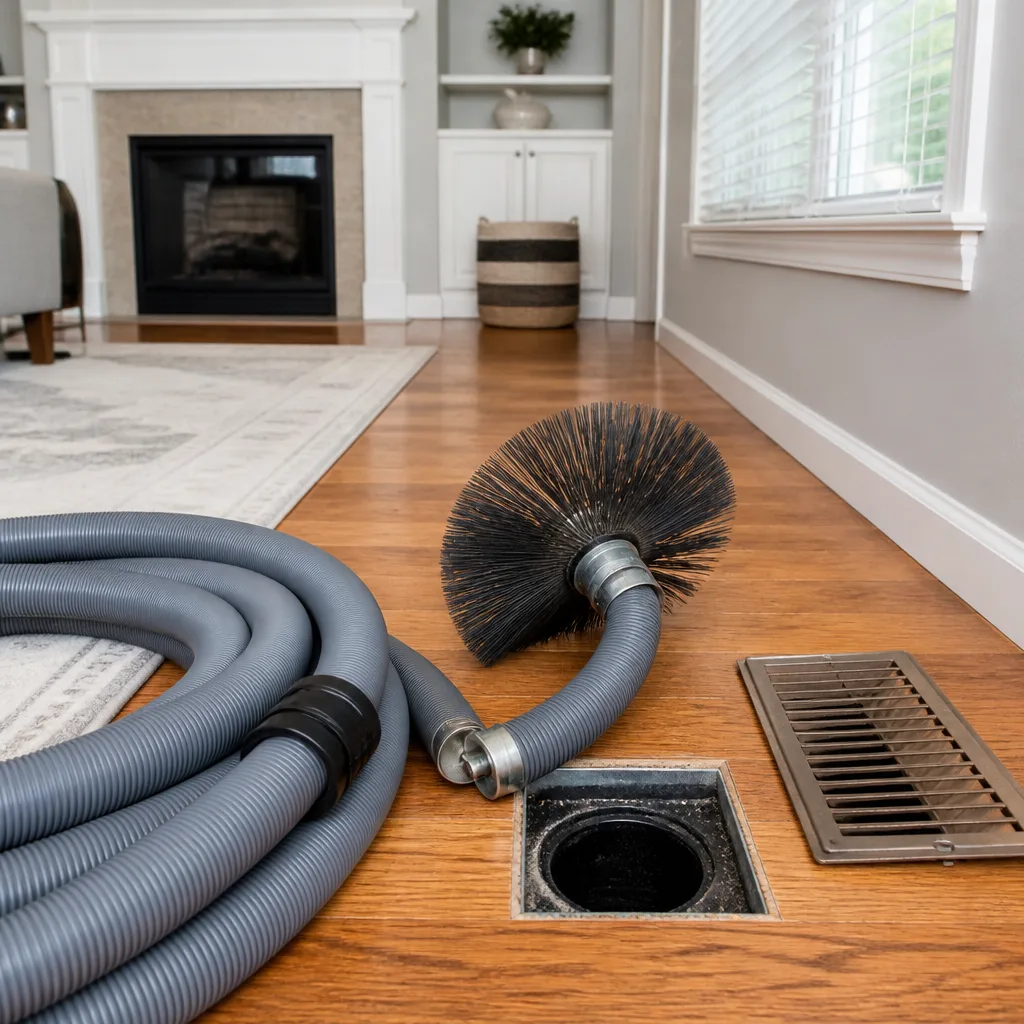 Whole-home duct cleaning
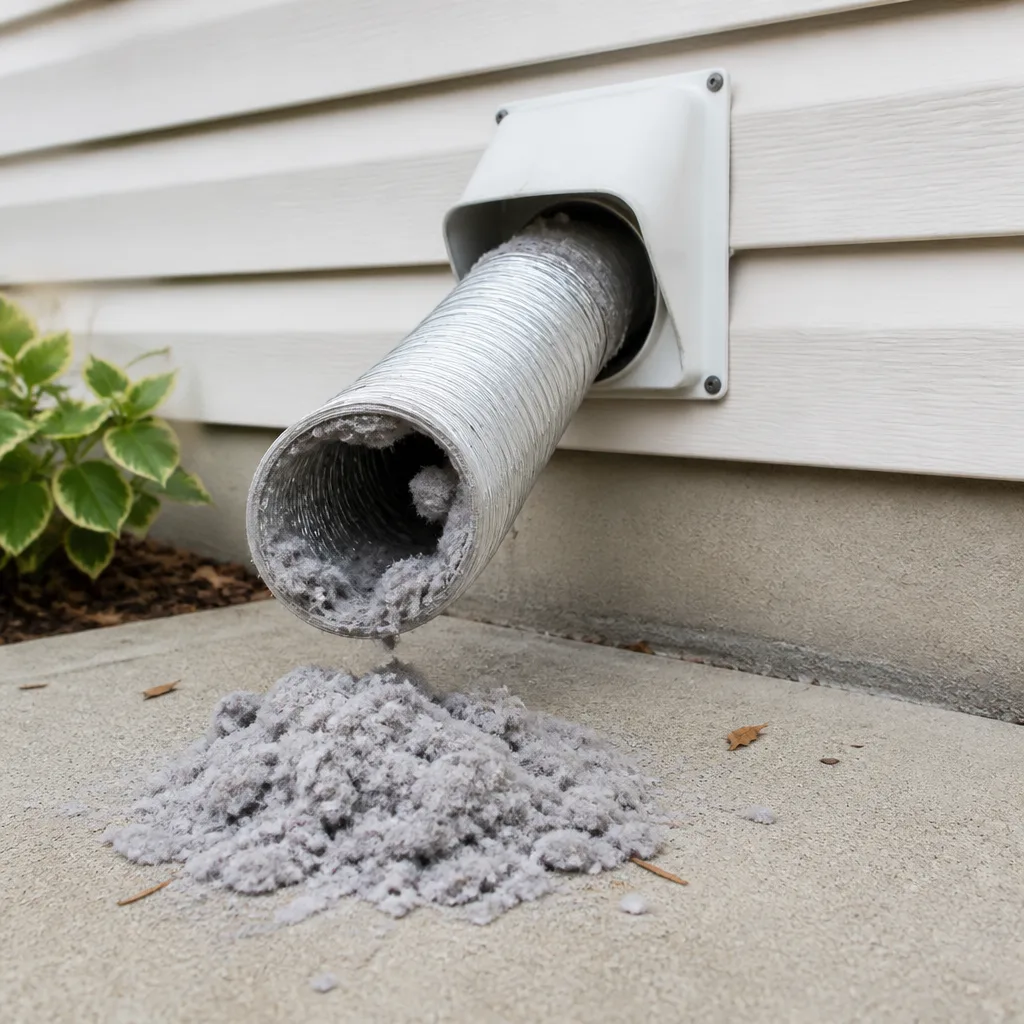 Dryer vent cleaning
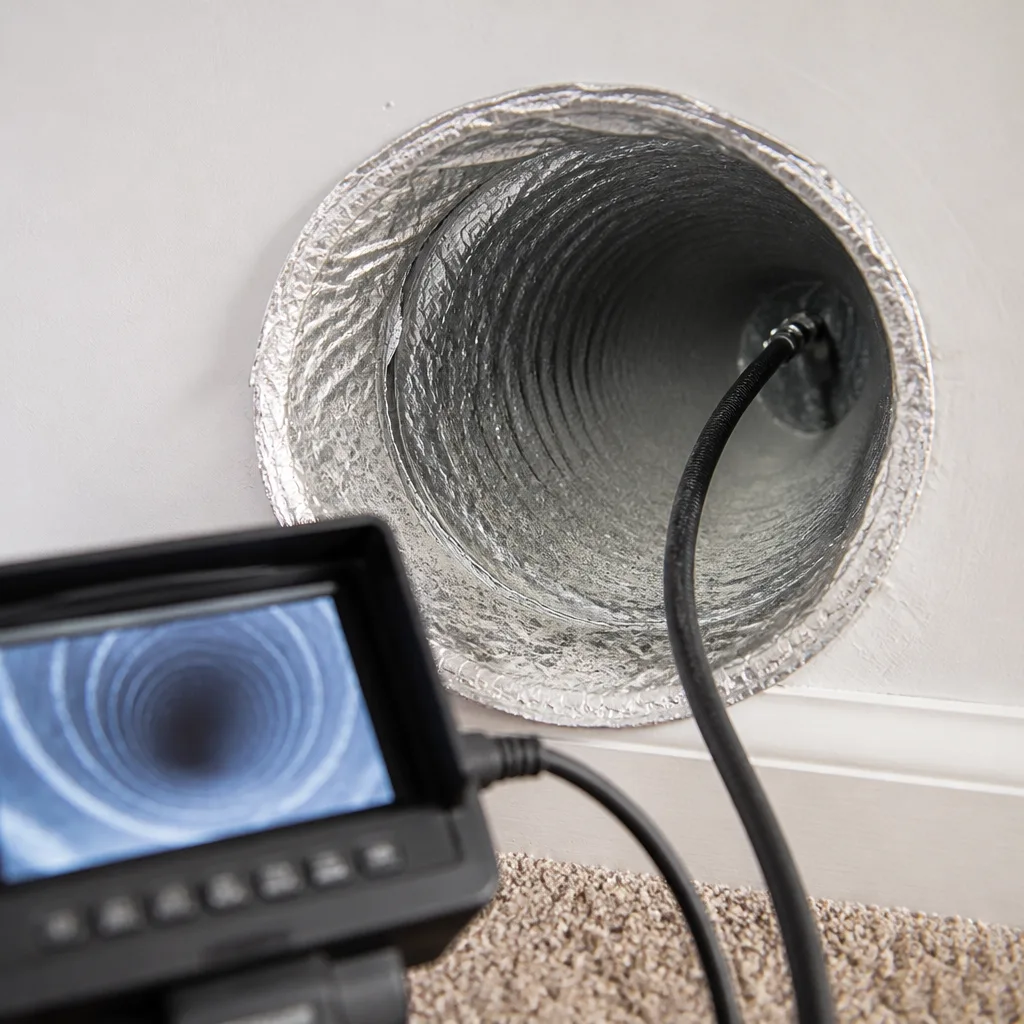 Camera inspection
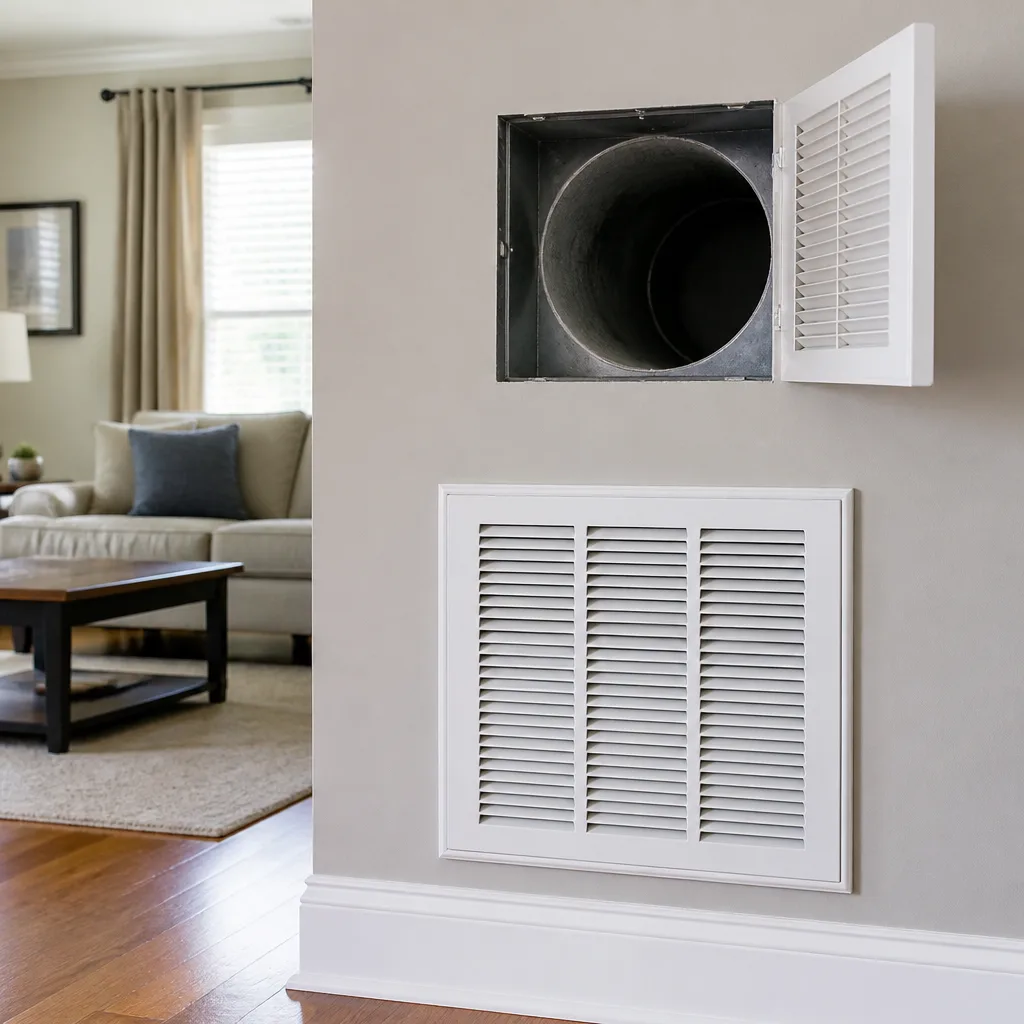 Sanitizing & deodorizing
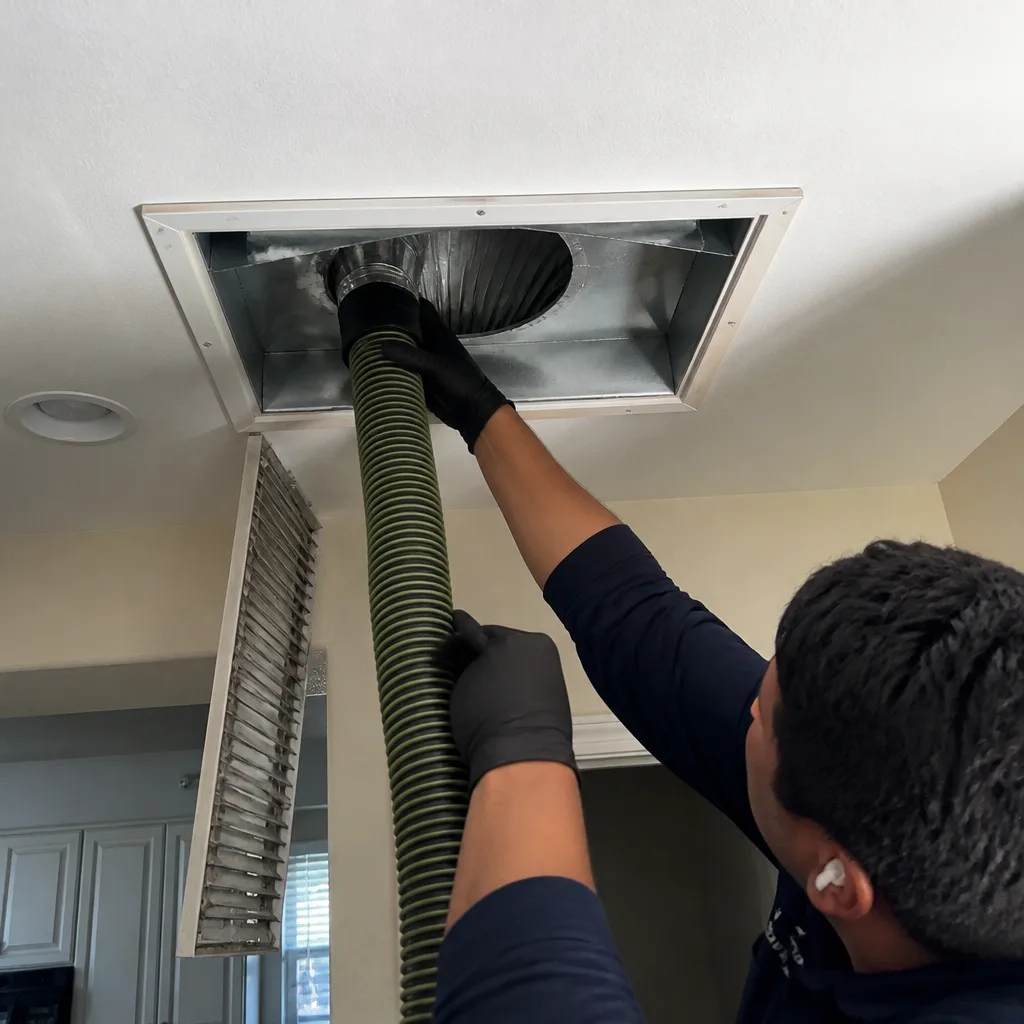
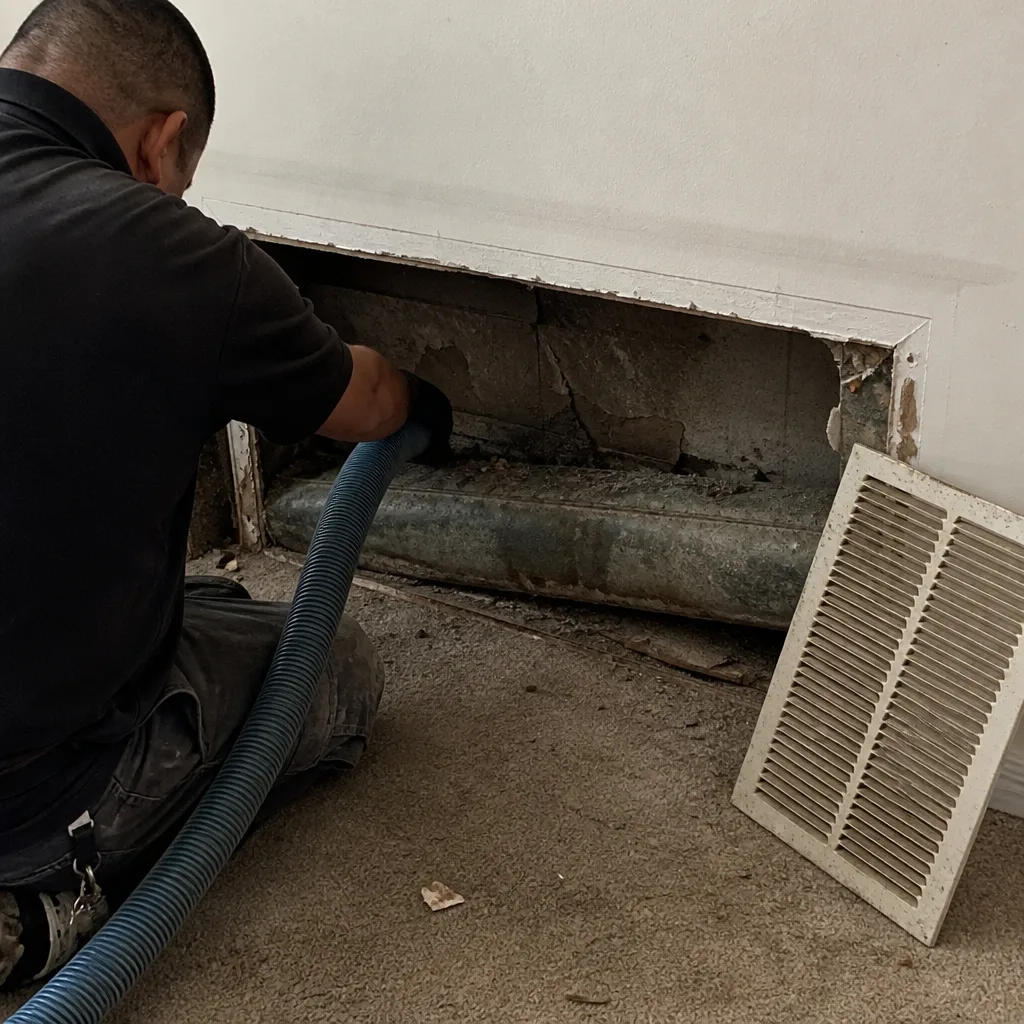
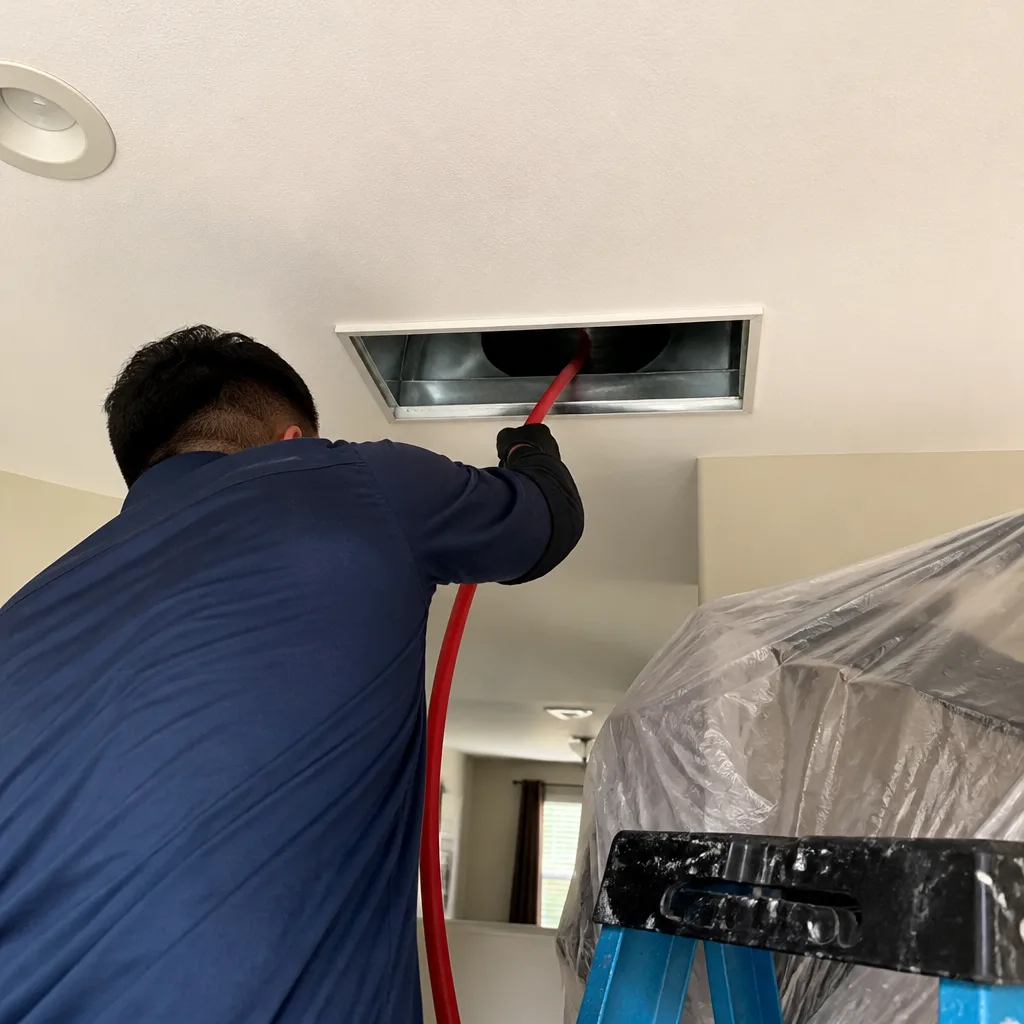
Whole-system duct and dryer vent check with before-and-after photos - you see exactly what came out of your vents
That "$99 whole-house special" is a bait ad - the real number appears once they are in your hallway, or the "clean" is a shop-vac at the register. We photograph the inside of your ducts before and after instead.
Air Duct Cleaning Emergency Preparedness Guide for La Mesa Homes
La Mesa homeowners keep go-bags ready for wildfire season and know to check gas lines after an earthquake. But almost nobody prepares their duct system, which is strange when you think about it. After the 2003 Cedar Fire and the 2007 Witch Creek Fire, restoration contractors in San Diego County reported something consistent: homeowners who ran their HVAC systems during or immediately after smoke events embedded fine particulate into every surface of their ductwork. What could have been a standard cleaning became full remediation. This guide walks through exactly how to prepare your La Mesa home’s duct system before disaster hits, what to do during a smoke event, and how to inspect everything after an earthquake, so you’re not the one paying for remediation when a shutdown protocol would have cost nothing.
Styles & brands we work with
- Whole-home duct cleaning
- Dryer vent cleaning
- Camera inspection
- Sanitizing & deodorizing
Quick Answer
Air duct cleaning emergency preparedness for La Mesa homes means three things: having the right MERV 13 filters staged before fire season, knowing exactly when to shut your HVAC down during a smoke event, and inspecting duct connections after any seismic activity. The goal is preventing smoke, ash, and debris from contaminating your duct system in the first place, because post-disaster remediation costs four to six times more than a standard Air Duct Cleaning in La Mesa.
Table of Contents
- The HVAC Shutdown Protocol for La Mesa Wildfire Smoke
- Post-Earthquake Duct Inspection Checklist
- Smoke Remediation vs. Standard Cleaning: What’s Different
- Documenting Duct Condition Before Disaster Strikes
- Building a 90-Day HVAC Emergency Supply Kit
- Why Your Filter Choice Matters More During Emergencies
- Dryer Vents: The Overlooked Fire Hazard in Emergency Planning
- Common Mistakes to Avoid
- When to Call a Professional
- Frequently Asked Questions
- The Bottom Line
The HVAC Shutdown Protocol for La Mesa Wildfire Smoke
During wildfire season in La Mesa, your HVAC system becomes either your best ally or the most efficient contaminant distribution network in your home. The difference comes down to one decision: knowing when to run it, when to switch modes, and when to kill it entirely.
Here’s the protocol we recommend to every La Mesa homeowner before fire season starts:
- Stage the right filter now, not when smoke is visible. You want a MERV 13 filter, minimum, already in your garage. Honeywell and Aprilaire both make MERV 13 options that fit standard residential slots. If your system can’t handle MERV 13’s airflow resistance, get a MERV 11 and plan to run the fan continuously during smoke events to compensate. Check your system’s manual or ask a technician what your blower can handle before you buy a case of filters that choke your airflow.
- When smoke first becomes visible or you smell it indoors, switch your thermostat to recirculation mode. This closes the fresh-air damper and stops pulling outdoor air into the system. On most La Mesa homes with central HVAC, this is a “fan on” setting combined with no fresh-air intake, but you need to verify your specific setup. Homes with whole-house fans need to turn those off immediately, since they pull unfiltered outdoor air directly into living spaces.
- If smoke becomes heavy or ash starts accumulating on outdoor surfaces, shut the system down entirely. No amount of filtration inside your unit will keep pace with dense smoke. Running the blower just circulates what’s already inside and pulls in more through leaks in the return ductwork. Duct systems in La Mesa homes, especially older ones near downtown or in the hillside neighborhoods, commonly have 15 to 25 percent leakage at joints and connections. That leak rate means outdoor air enters even when dampers are closed.
- After the smoke clears, don’t restart immediately. Inspect the outdoor condenser unit for ash accumulation. Check the indoor filter. If the filter is caked, replace it before running the blower. Then run the fan-only mode for 30 minutes with a fresh filter to start clearing residual particulates. If you smell smoke inside after this, you need a professional assessment, because that odor means contamination has settled inside the Duct Cleaning La Mesa home system itself, not just in the air.
One thing we’ve seen repeatedly in La Mesa homes after smoke events: homeowners replace the filter, run the system, and assume they’re fine, then spend months dealing with a smoke odor that won’t go away. The odor is coming from the duct lining and the coil, not the air passing through. That’s a contamination problem, not a filtration problem, and it requires actual cleaning, not a better filter.
Post-Earthquake Duct Inspection Checklist
La Mesa sits in a seismically active zone, and every homeowner here knows the drill: check for gas leaks, inspect the foundation, look for cracks in walls. But ductwork moves during earthquakes too, and disconnected ducts create two immediate problems. First, conditioned air dumps into crawlspaces and attics instead of living spaces. Second, and worse, a disconnected return duct pulls unfiltered air from wherever it’s hanging, which might be a dusty crawlspace, a fiberglass-insulated attic, or worse.
After any earthquake above a magnitude 4.0 felt in La Mesa, walk through this inspection before running your HVAC:
- Listen for new rattling or banging when the blower starts. Disconnected flex duct often flails when airflow hits it. If you hear new noise from an attic or crawlspace, that’s a sign something separated at a connection point.
- Inspect accessible duct runs in the attic or crawlspace. Flex ducts connect to metal collars with zip ties or clamps. Seismic movement can pull these apart, especially at the plenum where a long run meets the main trunk line. Look for sagging, visible gaps, or sections that have pulled off entirely. Bring a flashlight and wear a dust mask if you’re going into the attic.
- Check registers for new dust patterns or reduced airflow. If one room suddenly gets weak airflow while others stay normal, that room’s duct run may have separated. Debris blowing out of a specific register is another red flag.
- Inspect the outdoor condenser unit for shifting or damage. The copper line set connecting the outdoor unit to the indoor coil can kink if the unit shifts on its pad. Kinked lines reduce refrigerant flow and can damage the compressor if you run the system.
- Before resuming operation, confirm the return duct path is intact. A disconnected return pulling air from a crawlspace is the fastest way to fill your entire system with dust, pest droppings, and whatever else lives down there. If you can’t access your return ducts, call a professional before running the system.
If you find separation at flex duct collars, this is where Air Duct Repair in La Mesa capability becomes relevant. A company that only cleans ducts can’t reattach, reseal, or replace compromised sections. You’d be stuck calling a second contractor and waiting through another scheduling cycle while your system stays offline. With repair capability in-house, a single visit addresses both the contamination and the structural problem.
Smoke Remediation vs. Standard Cleaning: What’s Different
Standard duct cleaning removes accumulated dust, pet dander, and the usual household debris that collects over years of normal operation. Smoke remediation is a different job entirely. Smoke particulates are smaller, stickier, and they bond to duct surfaces in ways that ordinary dust doesn’t. If a contractor shows up after a wildfire smoke event with the same equipment and process they’d use for routine cleaning, they’re not going to solve your problem.
Here’s what distinguishes a contractor equipped for smoke remediation from one who isn’t:
- HEPA-rated extraction is non-negotiable. Standard vacuum systems without HEPA filtration capture larger particles but exhaust fine smoke particulates right back into your home. Nikro HEPA-rated equipment ensures that what’s captured stays captured. The fine ash from wildfire smoke goes through ordinary filters like they aren’t there.
- Agitation is more aggressive and more thorough. Smoke residue bonds to duct walls, coil fins, and blower components. Removing it requires rotary brush agitation, not just vacuuming. Rotobrush rotary-brush extraction systems dislodge what passive vacuuming leaves behind. This is the professional standard for a reason.
- Containment matters differently. During standard cleaning, dust containment is about keeping the job tidy. During smoke remediation, it’s about preventing cross-contamination of unaffected rooms. Abatement Technologies negative-air containment systems, the same standard used in professional remediation, create negative pressure so contaminants are captured at the source rather than redistributed through the house.
- The coil and blower assembly may need attention. Standard duct cleaning often skips the evaporator coil and blower. Smoke particles embed in the coil’s fin matrix and the blower wheel, and unless those components are cleaned, the smoke odor returns every time the system runs. Some situations require coil replacement, particularly if smoke exposure was prolonged or the coil was already aging.
We’ve worked with La Mesa homeowners after several regional fire seasons, and the pattern is consistent: houses that ran their HVAC during heavy smoke needed deep remediation, including coil cleaning and in some cases duct section replacement. Houses that shut down and stayed shut down until cleaning could be scheduled needed standard cleaning plus coil inspection. The shutdown protocol is the cheapest insurance you can buy.
Documenting Duct Condition Before Disaster Strikes
Insurance adjusters process hundreds of post-disaster claims, and the homeowners who get full HVAC coverage are the ones with documentation. The ones who get denied or lowballed are the ones making claims based on “it worked before the fire.” Here’s what to have on hand before La Mesa’s next wildfire or earthquake:
- Service records showing recent professional cleaning. If your Air Duct Cleaning in La Mesa was performed within the last 12 to 18 months, you have a receipt that establishes baseline condition. Adjusters treat a recently serviced system differently than one with no maintenance history.
- Photographs of accessible duct sections, registers, and the air handler. Take photos during a service visit if you can, or open accessible panels and photograph what you can see. Date-stamped photos showing clean ducts, intact connections, and a clean coil give you a before state to compare against after a disaster.
- The filter change log. This sounds tedious, but writing the date on the filter frame when you install it and keeping the old filter packaging creates a maintenance paper trail. It also helps you track how quickly your filter loads in normal conditions, which gives you a baseline for recognizing abnormal loading during smoke events.
- Model numbers and serial numbers for your HVAC equipment. Keep these written down somewhere accessible, not just on the unit itself. After a fire or flood, equipment labels can be damaged. Having the make, model, and age documented makes replacement valuation straightforward.
One specific thing adjusters look for: whether the damage existed before the event. Pre-existing duct disconnection, visible corrosion on the coil, or evidence of long-term neglect will be used to deny claims even when the disaster legitimately caused additional damage. A documented service history closes that loophole before it opens.
Building a 90-Day HVAC Emergency Supply Kit
Every La Mesa household should have an emergency kit with food, water, and first aid supplies. Your HVAC system deserves its own kit, and building it now, before the next fire season announcement, is the whole point of preparedness. Here’s what goes in it:
- Backup filters at the right MERV rating. Store at least three. During smoke events, filters load at three to five times their normal rate. Aprilaire and Honeywell both sell filters in multi-packs, and having spares staged means you’re not driving to home improvement stores after the evacuation warning goes out, when shelves are already empty.
- Register covers or magnetic vent seals. These let you seal off individual rooms from the duct system if you need to contain contamination or isolate an unused space. They also prevent ash from settling into duct openings if your system has to stay off for an extended period.
- Contact information for a certified restoration contractor. Write down the phone number before you need it. When smoke clears after a fire event, restoration companies get booked within hours. The homeowners who call first get scheduled first. Having a number staged in your emergency kit eliminates the delay of researching contractors during the recovery period.
- A flashlight and inspection mirror for post-earthquake duct checks. You can’t inspect what you can’t see. A basic inspection mirror lets you look at flex duct connection points in tight attic spaces without contorting yourself into unsafe positions.
- Your system’s shutdown and restart procedure, written down. In an emergency, memory fails. Write down your specific thermostat’s recirculation mode activation sequence, where your breaker is for the air handler, and where your outdoor unit disconnect switch is located. Tape it inside the kit.
For the filter rating question that comes up constantly: MERV 13 is the right target for wildfire smoke, but not every system handles it. Homes with older blowers or undersized return ducts may experience frozen coils or tripped limits with MERV 13’s resistance. If you’re unsure, have a technician evaluate your system’s static pressure with a higher-MERV filter installed. It’s a fifteen-minute test that prevents a compressor failure during a heat wave.
Why Your Filter Choice Matters More During Emergencies
Most La Mesa homes run a basic MERV 8 fiberglass filter that costs a few dollars and does a reasonable job protecting the equipment from large dust. That’s fine for normal operation with no active contamination events. During wildfire smoke, MERV 8 is essentially a decoration. Wildfire smoke particulate runs from 0.4 to 0.7 microns, and MERV 8 captures only fractions of that range. MERV 13, by comparison, captures 85 percent or more of particles in that size band.
The trade-off is airflow. Higher MERV ratings mean tighter weave, which means more resistance. If your duct system in La Mesa was designed with marginal return capacity, which is common in 1970s and 1980s construction in neighborhoods like Fletcher Hills or the areas around Helix, a MERV 13 filter can reduce airflow enough to cause coil freezing in summer or heat exchanger overheating in winter. This is why the right answer is always “check what your system handles” rather than “buy the highest rating you can find.”
Honeywell and Aprilaire both make MERV 13 filters with design features that reduce pressure drop compared to generic equivalents. The Honeywell media filters and Aprilaire’s Space-Gard systems are compatible with many residential configurations and are worth considering if you’re upgrading filtration as part of your preparedness plan. If you’re running an Aprilaire air cleaner system already, you have a significant head start, because those systems were designed for higher-MERV media from the start.
Dryer Vents: The Overlooked Fire Hazard in Emergency Planning
Every La Mesa emergency preparedness conversation includes wildfire risk, but almost nobody connects it to the fire hazard already living in their laundry room. Dryer vents clogged with lint are a leading cause of residential fires, full stop. During emergencies, the risk compounds: higher ambient temperatures make ignition easier, evacuation scenarios may leave dryers running unattended, and clogged vents that would be a problem anyway become an active hazard when nobody’s home to respond.
Dryer Vent Cleaning in La Mesa should be part of your pre-disaster checklist for the same reason you test smoke alarms: it’s a known risk with a cheap, scheduled fix. The airflow reduction from a clogged vent also forces your dryer to run longer, which during peak summer load on the grid is exactly when you don’t want appliances pulling extra power. A clean vent means shorter dry cycles, less lint accumulation inside the dryer cabinet, and reduced risk of the kind of slow-smoldering fire that can fill a duct system with smoke while you sleep.
If you haven’t had your dryer vent cleaned in the last two years, schedule it before fire season. It’s the most overlooked item in most La Mesa homes’ emergency preparedness plans, and it’s one of the few disaster-prevention steps that pays for itself in energy savings even if no emergency ever happens.
Common Mistakes to Avoid
- Running the HVAC during heavy smoke because “the filter will handle it.” Your filter won’t handle it. Wildfire smoke overwhelms residential filtration within hours, and every hour you run the system during heavy smoke deposits more particulate in the ductwork, coil, and blower assembly. Shut down and wait it out.
- Restarting the system after an earthquake without checking duct connections. Disconnected ductwork in an attic or crawlspace can pull in a decade’s worth of accumulated dust and pest debris in a single weekend. The damage compounds fast.
- Buying the highest MERV filter available without verifying airflow compatibility. Frozen coils and tripped limits are the most common consequences. A filter that chokes your system is worse than a lower-MERV filter that lets it run.
- Assuming standard duct cleaning will handle smoke contamination. It won’t. Smoke remediation requires HEPA extraction, aggressive agitation, and often coil cleaning. If a contractor doesn’t mention these specifics, they’re not equipped for the job, regardless of what their website says.
- Waiting until after an event to research contractors. In La Mesa, the weeks after a major smoke event see restoration companies booked solid for months. The homeowners who pre-vetted a contractor and have their number staged are the ones who get service first.
- Skipping dryer vent cleaning because “the dryer still works.” A dryer can function with a severely restricted vent, just inefficiently. It’s not a “wait until it breaks” situation; it’s a fire hazard that worsens gradually, silently, and without warning signs until it’s dangerous.
- Failing to document pre-disaster duct condition. Without before-photos and service records, your post-disaster insurance claim depends entirely on your adjuster’s goodwill. Documentation turns a contested claim into a straightforward one.
When to Call a Professional
You can handle the filter staging, the shutdown protocol, and the basic visual inspections yourself. But some situations require equipment, training, and experience that no homeowner should attempt to improvise. Call a professional if you find disconnected duct sections after an earthquake that you can’t clearly see both ends of. Call if you ran your HVAC during a smoke event and the smoke odor persists more than 48 hours after the outdoor air cleared. Call if you see visible ash or soot accumulation inside your registers or on your filter housing. And call if your insurance adjuster requires a professional assessment before processing your post-disaster claim.
Duct Cleaning La Mesa offers free estimates in La Mesa, and our technicians work with Rotobrush and Nikro equipment backed by Abatement Technologies containment systems, which means we’re equipped for both standard cleaning and smoke remediation scenarios. We also handle Air Duct Repair in La Mesa, so if inspection reveals structural issues alongside contamination, one visit addresses both. Call (833) 589-9836 to schedule an assessment.
Frequently Asked Questions
Smoke remediation for residential duct systems in La Mesa typically ranges from $800 to $2,500 depending on home size, contamination level, and whether the coil and blower assembly require attention. This is significantly more than standard cleaning because it involves HEPA-rated extraction, aggressive agitation protocols, and containment procedures that routine cleaning doesn’t require. Call (833) 589-9836 for a specific quote based on your home’s situation.
MERV 13 is the target rating for wildfire smoke particulate, but you need to verify that your system can handle the increased airflow resistance. Homes in La Mesa with older blower motors or undersized return ducts may not support MERV 13 without risking frozen coils or tripped thermal limits. Have a technician test your system’s static pressure with a MERV 13 filter installed before committing to it.
No. Residential duct systems aren’t accessible enough for DIY cleaning to be effective, and without HEPA-rated extraction equipment, you’ll simply redistribute fine smoke particulate throughout your home rather than removing it. Professional-grade equipment from manufacturers like Rotobrush and Nikro exists specifically because this is not a job for improvised tools. Attempting DIY smoke remediation usually costs more in the long run when professionals have to redo the work properly.
Check for new rattling or banging when the blower runs, reduced airflow in specific rooms, visible separation at flex duct connection points in accessible attic or crawlspace areas, or new dust blowing from registers. Any of these indicators suggests seismic movement damaged a duct connection, and you should have the system inspected before resuming normal operation.
For La Mesa homes without unusual conditions, professional Air Duct Cleaning in La Mesa every three to five years is reasonable. Homes with pets, renovation history, occupants with allergies or respiratory conditions, or exposure to wildfire smoke should consider more frequent cleaning. If you ran your HVAC during a smoke event, schedule cleaning before the next fire season regardless of the calendar.
Coverage depends on your policy and documentation. Most standard homeowners policies in California cover smoke damage remediation if the damage is documented and exceeds your deductible. Pre-existing service records and photographs of clean duct condition before the event significantly improve claim outcomes. Adjusters commonly deny claims where the homeowner can’t demonstrate the contamination resulted from the covered event.
The Bottom Line
La Mesa prepares for wildfires and earthquakes in obvious ways, but the duct system connecting every room in your home is the vector that turns an outdoor smoke event into an indoor contamination problem. Stage MERV 13 filters before the next fire season. Learn your system’s shutdown and recirculation procedures now, not during an evacuation warning. Inspect duct connections after any seismic event before running your HVAC. Document everything with photos and service records. And recognize that post-disaster scenarios require remediation capability, not just routine cleaning. Preparation costs almost nothing. Remediation costs thousands, and the difference is decided before the first ash falls.
Written by the team at Duct Cleaning La Mesa, serving La Mesa since 2012.
See the difference
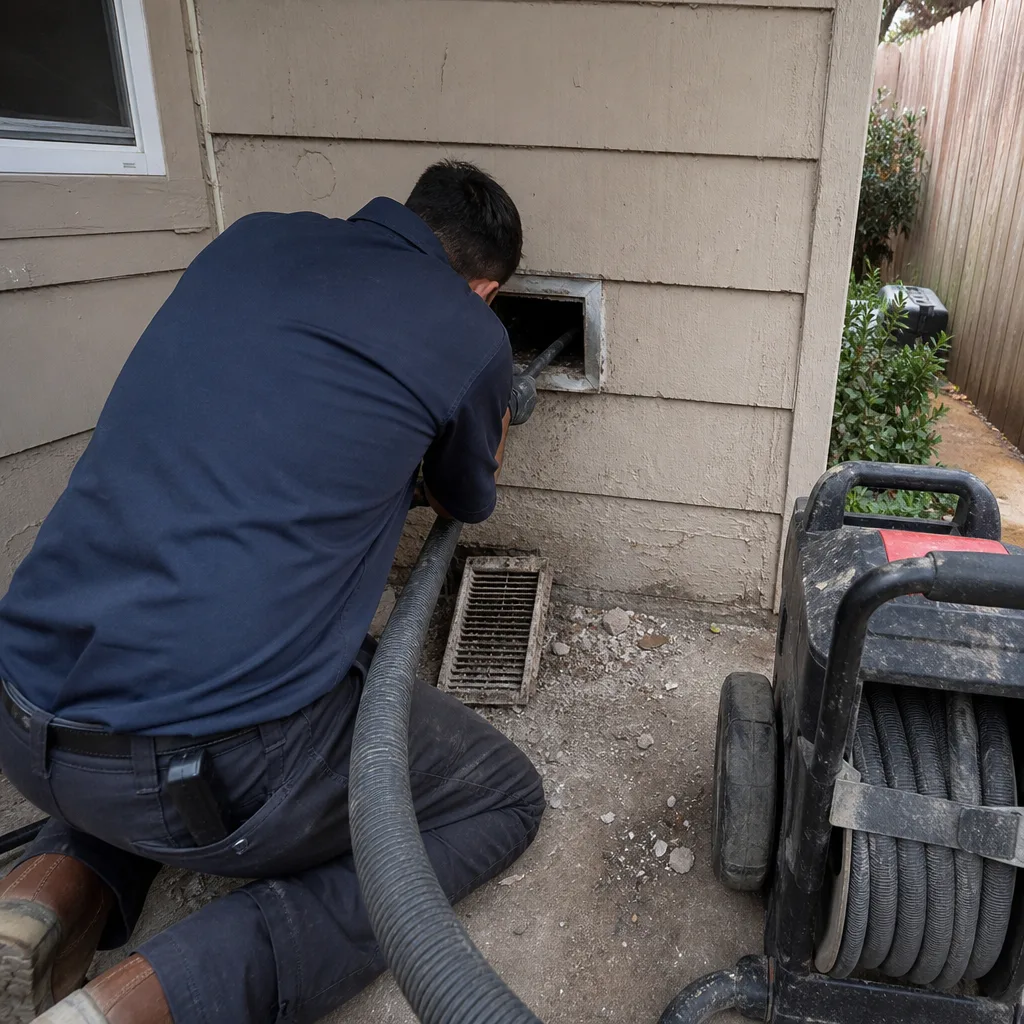 Before
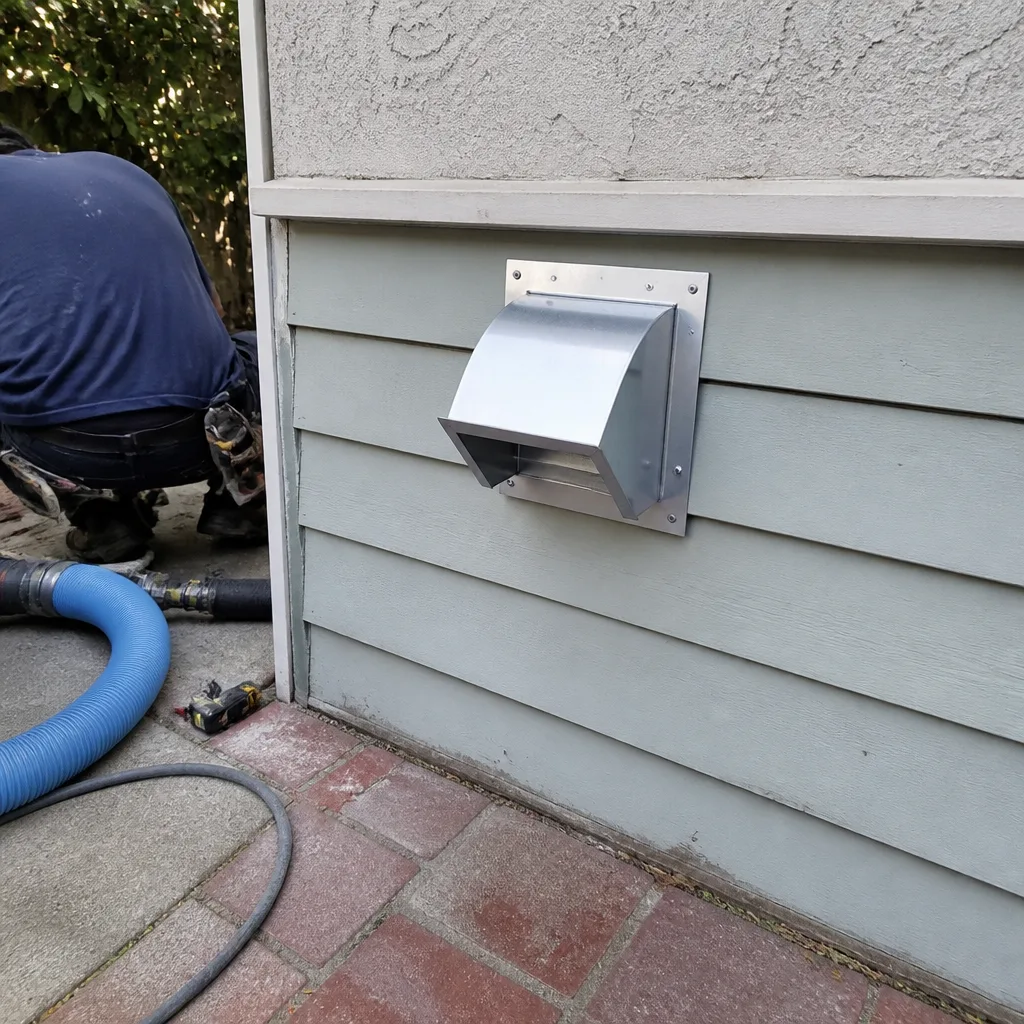 After
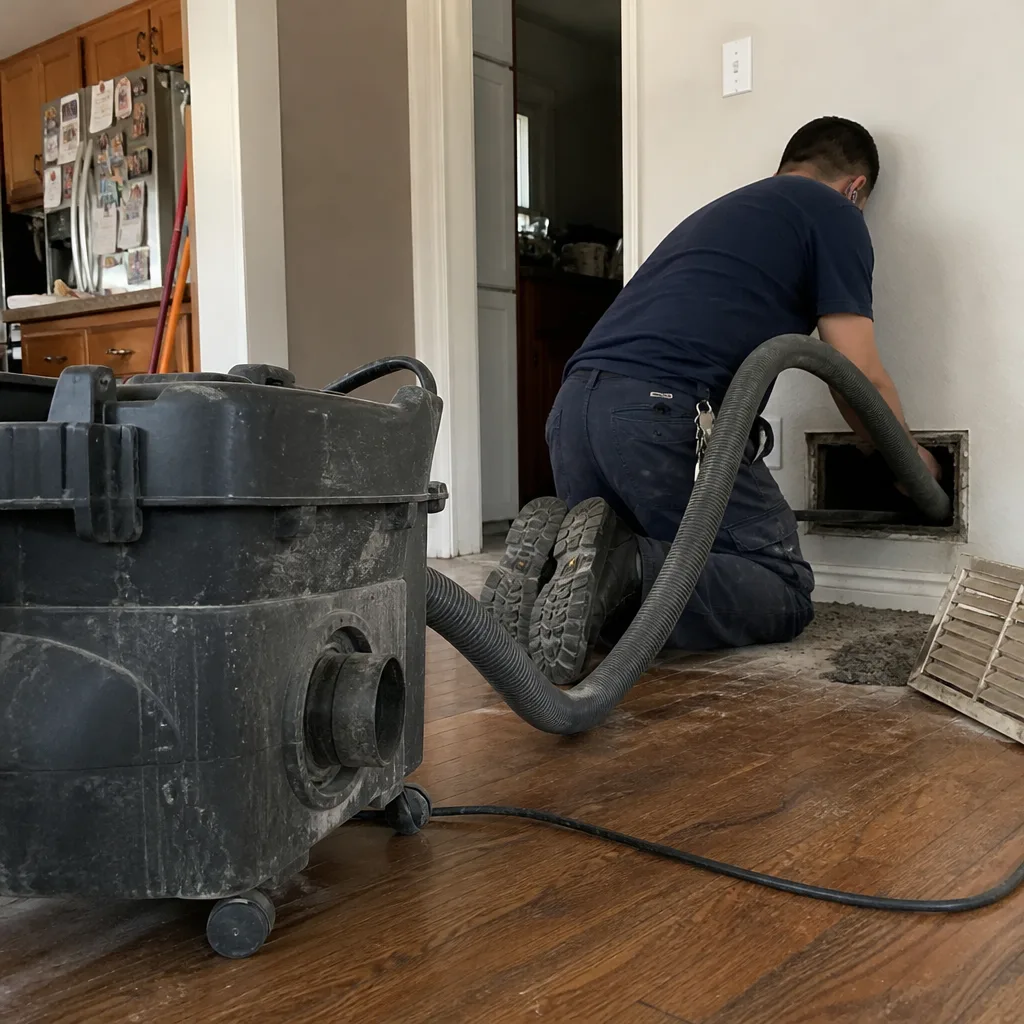 Before
 After
 Before
 After