
Last updated November 2, 2026
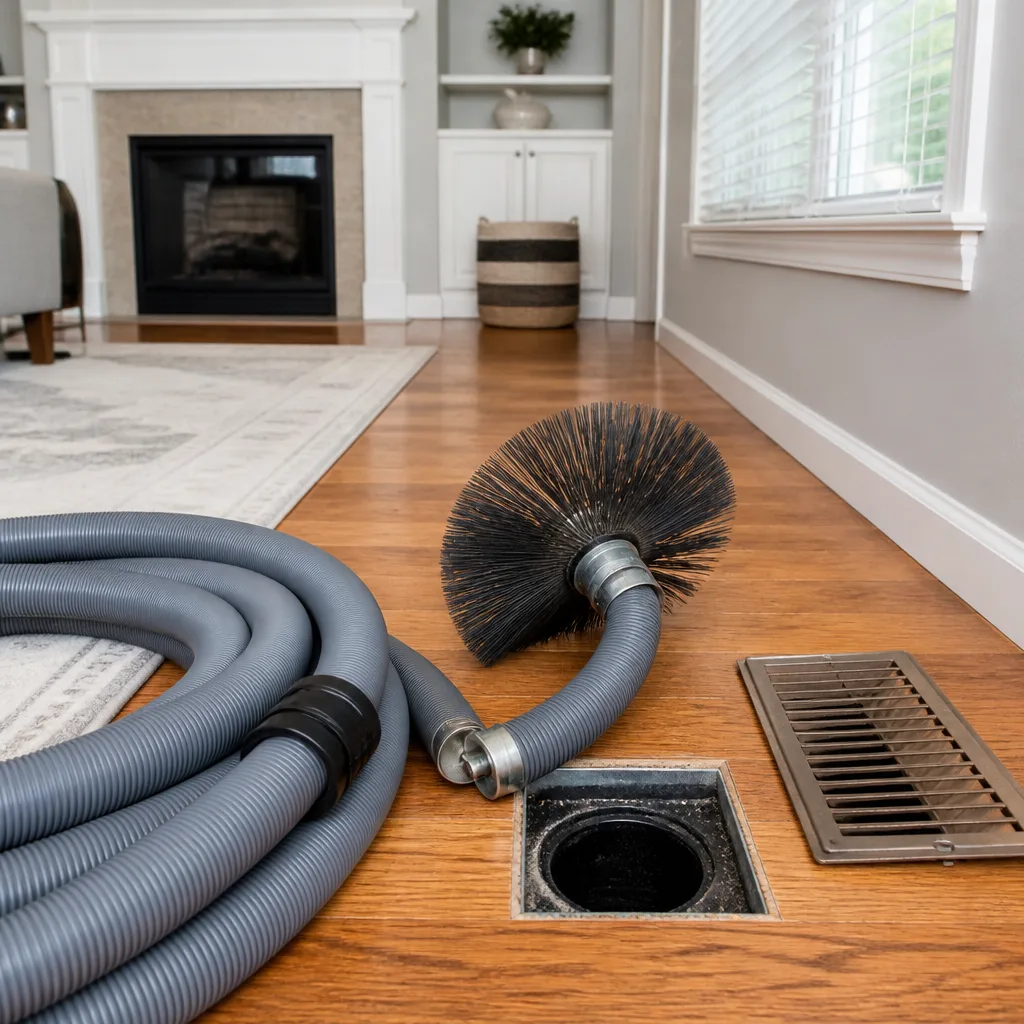 Whole-home duct cleaning
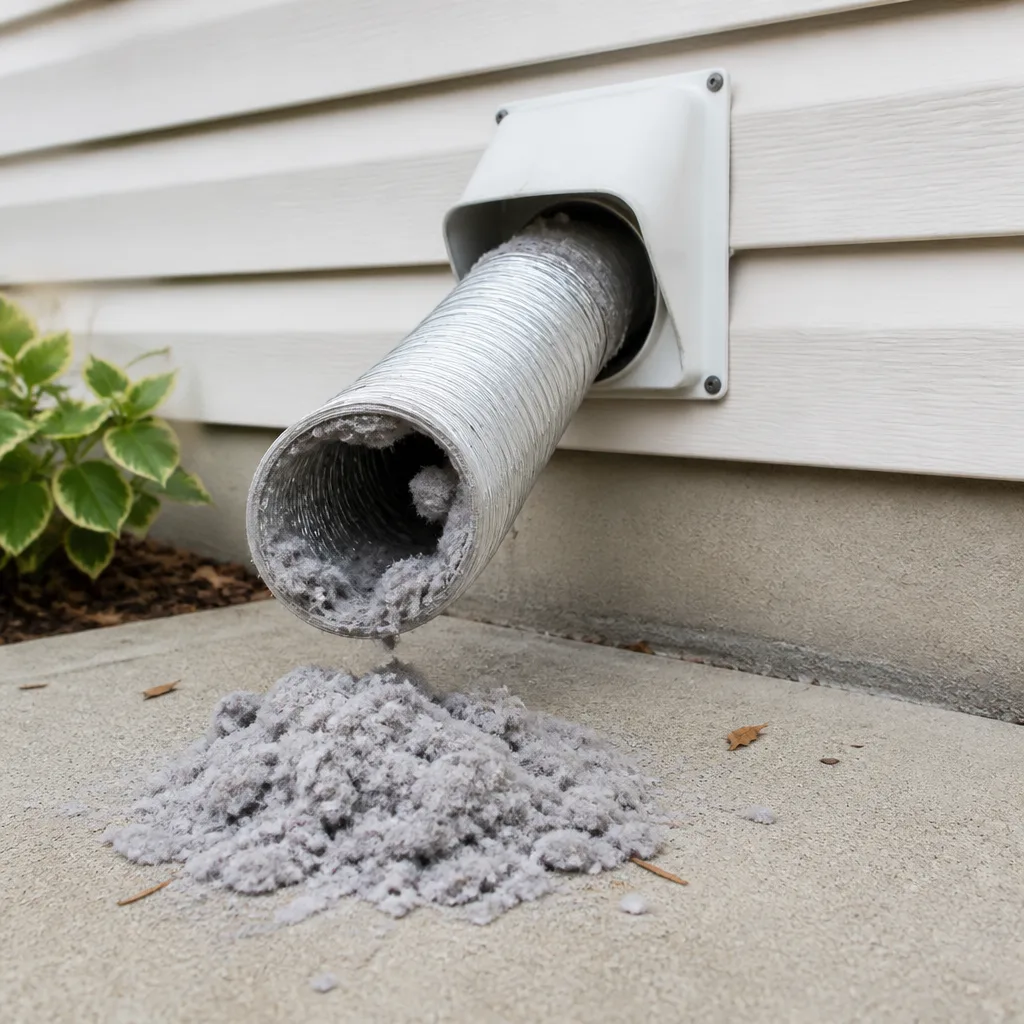 Dryer vent cleaning
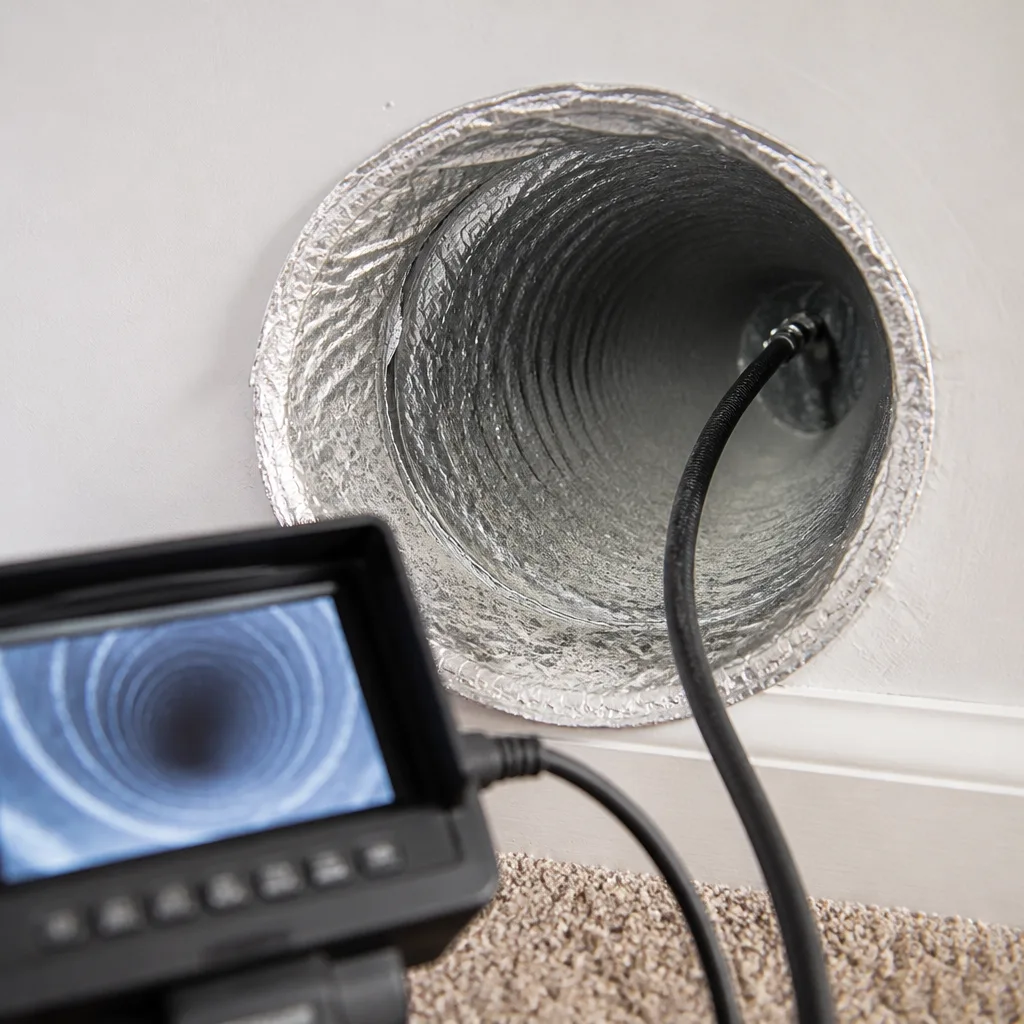 Camera inspection
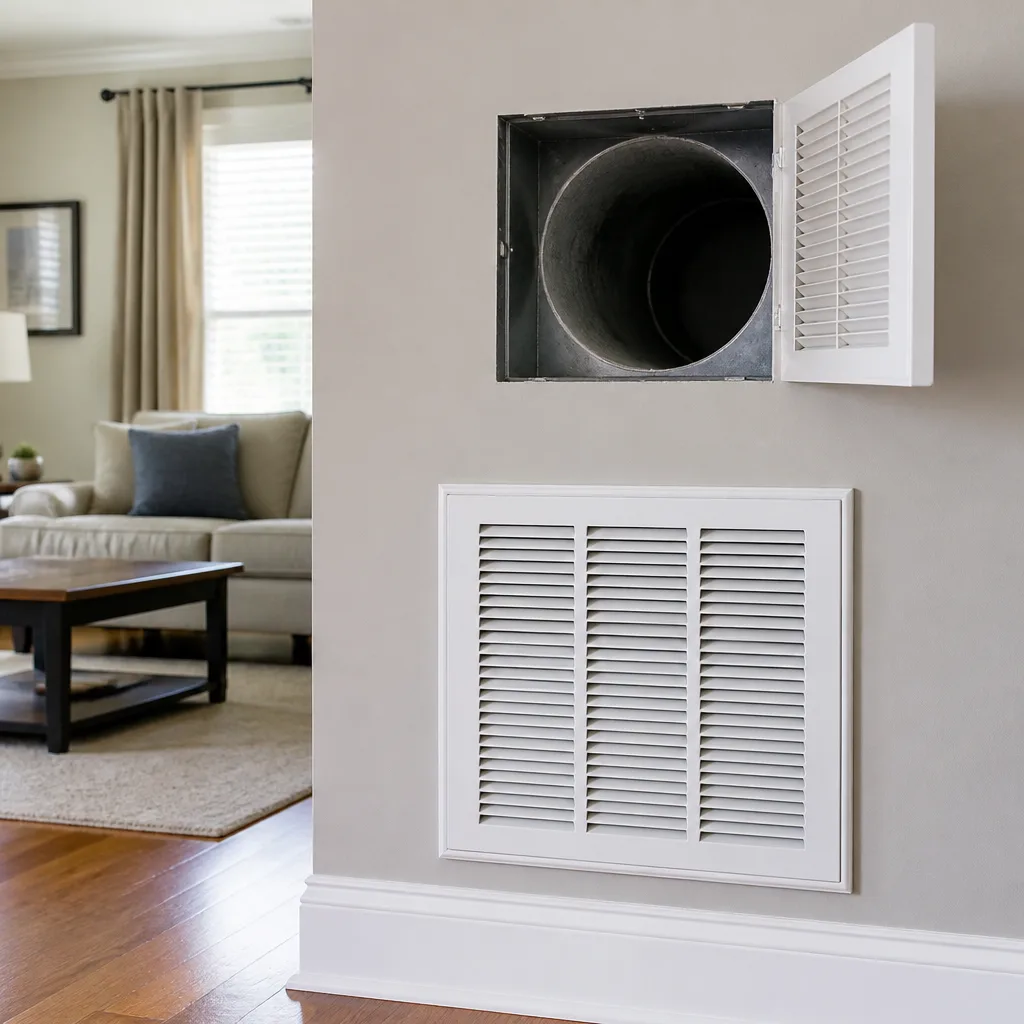 Sanitizing & deodorizing
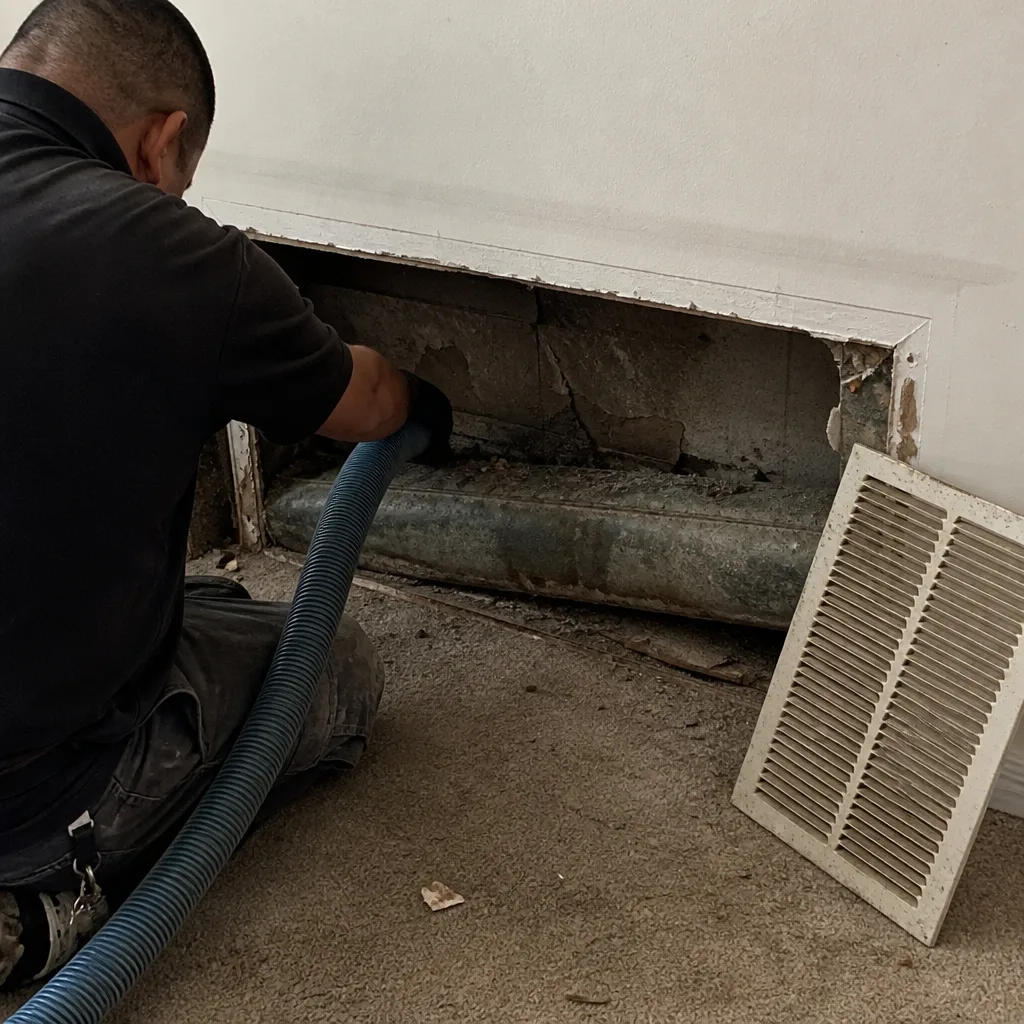
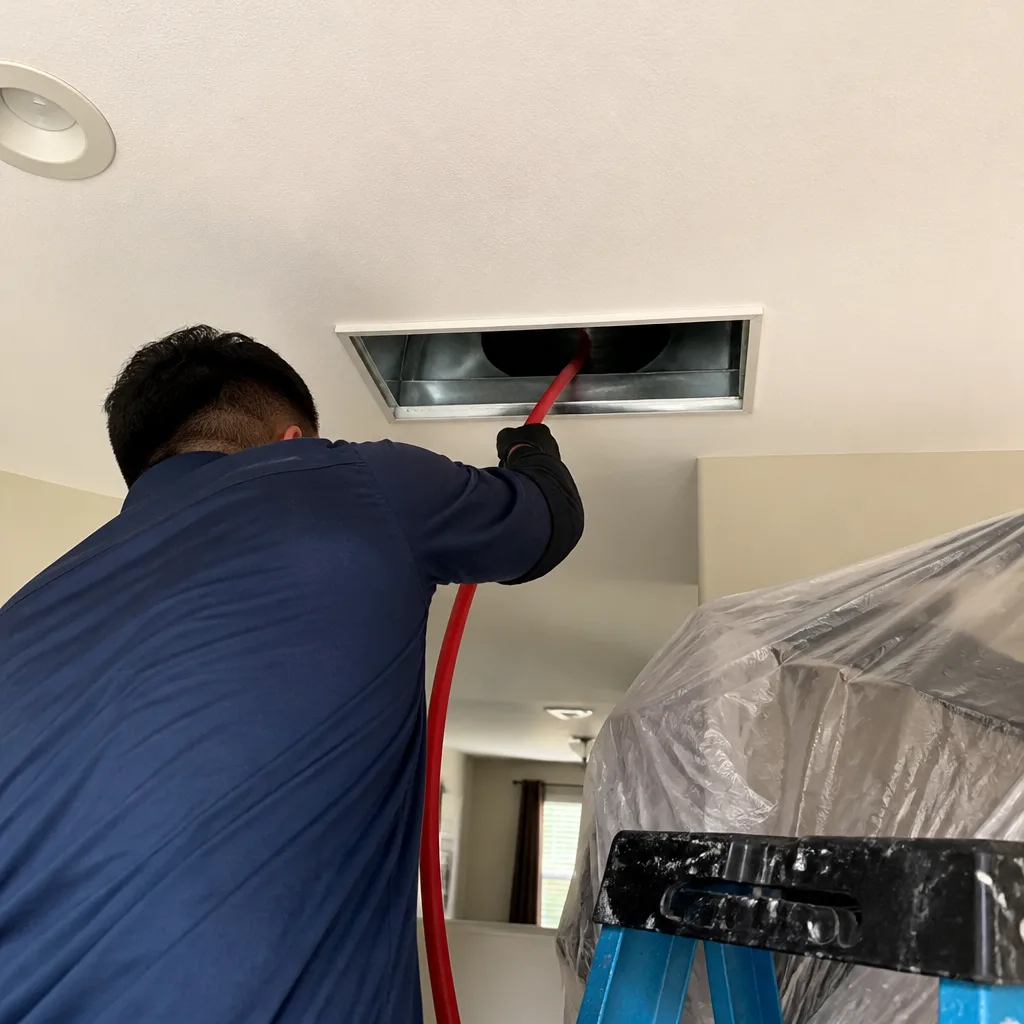
Whole-system duct and dryer vent check with before-and-after photos - you see exactly what came out of your vents
That "$99 whole-house special" is a bait ad - the real number appears once they are in your hallway, or the "clean" is a shop-vac at the register. We photograph the inside of your ducts before and after instead.
Seasonal Air Duct Cleaning Care for La Mesa: Year-Round Homeowner’s Guide
During the 2023 wildfire season, air quality in La Mesa crossed an AQI of 150 on multiple days. That’s the threshold where the air is unhealthy for everyone, not just sensitive groups. Your HVAC system was pulling that air through your ductwork for hours at a stretch. Here’s the part most seasonal guides miss: La Mesa doesn’t have a four-season playbook. We have three distinct stress periods – wildfire and Santa Ana season, the marine layer months, and a long hot summer – and each one deposits something different inside your ducts. This guide maps out exactly what to watch for and when, so you’re not paying for air duct cleaning you don’t need or skipping the ones you do.
Quick Answer
Seasonal air duct cleaning care in La Mesa means timing your service around three local stress periods, not the calendar. The highest-priority window is late August through September, before the first Santa Ana wind event pushes wildfire smoke and fine particulate into your return air. After significant wind or smoke events, inspect your system within two weeks. In spring, watch for condensation-related dust clumping in coastal-influenced neighborhoods like the areas west of 125 toward Lake Murray. And before summer peak load, verify your system isn’t working against restricted airflow from accumulated winter and spring buildup.
Styles & brands we work with
- Whole-home duct cleaning
- Dryer vent cleaning
- Camera inspection
- Sanitizing & deodorizing
Table of Contents
- Pre-Fire Season Prep: Late August Through September
- Post-Santa Ana Protocol: When Wind Events Demand Action
- Spring and the Marine Layer: Condensation, Dust, and What Mold Actually Looks Like
- Summer Peak Load: How Dirty Ducts Compound Cooling Costs
- Year-Round Pest Pressure in La Mesa: The Seasonal Rodent Problem
- What Professional-Grade Equipment Actually Does in Your Ducts
- Common Mistakes to Avoid
- When to Call a Professional
- Frequently Asked Questions
Pre-Fire Season Prep: Late August Through September
If you clean your ducts once a year in La Mesa, this is the window that matters most. Offshore winds typically begin in September and peak through November. Before that first red flag warning, your ductwork should be as clean as it will ever be, because whatever is already in there is about to get trapped in place by a fresh layer of fine particulate.
Here’s the sequence we’ve observed across hundreds of La Mesa homes: wildfire smoke carries particles in the 2.5 micron range and smaller. These are small enough to pass through a standard fiberglass return filter. Once inside the duct system, they settle on duct walls. When the next wind event arrives or the system kicks into higher use, that particulate layer gets compressed into the existing dust and debris. It becomes harder to remove the longer it sits. If your ducts haven’t been cleaned in three or more years, pre-fire season is the single most consequential time to do it.
What to do before the first offshore wind event:
- Inspect your return vents and register covers. If you see grey or dark accumulation at the edges, that’s visible proof of what’s deeper in the system.
- Upgrade your return air filter for fire season. A MERV 11 or 13 filter during September through November captures more fine particulate than a basic fiberglass filter. Check your system’s static pressure rating first, or have a technician verify the higher MERV rating won’t restrict airflow.
- Schedule the annual cleaning before the first Santa Ana forecast. The goal is clean duct walls before smoke arrives, not after. Once the smoke has been pulled through, you’re looking at a shorter interval before the next cleaning, not a free pass.
- Check for gaps in the return air path. Homes in older La Mesa neighborhoods like the village area near Allison Avenue or the hillside streets off Fletcher Parkway often have disconnected return boots or gaps at the platform. These pull unconditioned, unfiltered attic or crawlspace air directly into the system during a smoke event.
This window is the one where we tell La Mesa homeowners: if you’re going to do one thing this year for your indoor air quality, do this. The goal isn’t to clean after the smoke. It’s to make sure the smoke has a clean system to pass through, so when the particulate lands, it’s not piling on top of three years of accumulated debris.
For a full walkthrough of what a professional cleaning actually involves, see our Air Duct Cleaning in La Mesa service page.
Post-Santa Ana Protocol: When Wind Events Demand Action
Santa Ana winds in La Mesa routinely gust 30 to 50 miles an hour, and they don’t just bring smoke. They stir up dust from the surrounding hills and push it horizontally for hours. The winds come from the east and northeast, which means properties on the eastern edges of La Mesa – the neighborhoods up toward Mount Helix and the areas bordering El Cajon – get the strongest particulate loading.
After a significant wind event – one that lasts more than 24 hours, coincides with a red flag warning, or leaves visible dust on patio furniture – here’s how to assess whether you need unscheduled cleaning:
- Check the filter first. Remove the return air filter and hold it up to a light. If it’s noticeably darker after a wind event, your ducts just processed a lot of particulate. Some of it got caught. Some of it didn’t.
- Look at the register nearest the air handler. Dust that makes it through the filter will show up first in the ducts closest to the unit. Remove one register cover and run a clean white cloth along the inside of the boot. Grey or black residue is evidence the event loaded the system.
- Smell the air when the blower first kicks on. During the first few seconds of a heating or cooling cycle, the blower stirs up settled particulate. A dusty or smoky odor at startup after a wind event means particulate settled inside the ducts, not just on surfaces.
If two of these three indicators are positive, an unscheduled cleaning is justified. If one is positive, mark the date and check again after the next event. If you had your ducts cleaned in August or September, one wind event typically doesn’t require another full cleaning. Two or three events in a single season – which happened during the 2023 fire season in La Mesa – does change the math. After prolonged exposure, the layer of fine particulate is dense enough that filter changes alone won’t address it.
Spring and the Marine Layer: Condensation, Dust, and What Mold Actually Looks Like
La Mesa sits inland enough to escape the worst of the coastal fog, but lower-elevation neighborhoods – particularly west of 125 close to Lake Murray and the areas sloping toward Mission Valley – get marine layer influence from late March through June. The air carries higher humidity than the rest of the year, and nighttime temperatures still dip into the 50s.
That combination creates condensation potential inside unconditioned duct runs. Attic and crawlspace ductwork that’s been collecting dust all winter now has moisture available. The result looks a lot like what homeowners fear most: clumps of grey material that resemble mold.
But here’s the distinction we teach every La Mesa homeowner: condensation plus accumulated dust creates dark, clumpy accumulation that is often not mold. It’s dust that has absorbed moisture and stuck to duct walls. Real mold growth in ducts requires sustained moisture – a persistent leak, a backed-up condensate pan, or months of elevated humidity. A one-week marine layer event won’t do it. A return duct that’s been sitting in a damp crawlspace for six months might.
What to look for in spring:
- Dust clumping at the return plenum or inside the blower compartment. This signals moisture contact and means the system is holding more debris than it should.
- A musty odor that’s constant, not startup-only. Startup-only odor is settled dust. Constant mustiness is a moisture problem that needs diagnosis before cleaning.
- Condensation on exterior duct surfaces in the attic. If the ducts are sweating, conditions inside are nearing the threshold where microbial growth becomes possible.
Spring cleaning in La Mesa makes sense for homes that ran their heating intermittently through winter and accumulated the usual household dust, plus homes in marine layer zones where that dust has now absorbed moisture. But it’s the second-priority window, not the first. If you cleaned before fire season and your filters have been changed regularly, spring is a filter replacement and inspection month, not an automatic cleaning month.
And remember that cleaning and repair are often needed together. A condensation problem that’s led to moisture in the ducts often means a sagging run, a gap, or a crushed section in the attic. If the duct isn’t fixed, the moisture returns next spring. See Air Duct Repair in La Mesa for what can be addressed in the same visit as a cleaning.
Summer Peak Load: How Dirty Ducts Compound Cooling Costs
La Mesa summers are not extreme by desert standards, but July through September pushes daytime highs into the 80s and 90s for weeks at a stretch. Air conditioning systems in La Mesa run 8 to 12 hours a day during peak summer. That’s a 60 to 80 percent increase in runtime compared to spring and fall. Every hour of runtime is an hour the blower is moving air across whatever has accumulated on the duct walls.
Here’s the compounding problem: dirty ducts restrict airflow. A system with visible dust accumulation in the return path and supply runs has to work harder to move the same volume of conditioned air. That translates to longer runtimes to reach the setpoint, which means higher energy costs per cooling day, and more wear on the blower motor. The blower is already running more hours in summer; dirty ducts make each of those hours less productive.
But cooling cost is the secondary issue. The primary issue is what the blower is now circulating. Summer in La Mesa means windows closed, system running, and the same indoor air being recycled through the ducts. Particulate that settled during fire season and spring marine layer months is now being steadily re-entrained into living spaces. If anyone in the home has allergy symptoms that peak in summer, the ducts are a likely contributor – and the fix is not a stronger filter, because the material is already past the filter and inside the distribution system.
What to check before summer peak load:
- Airflow at the supply registers in the farthest rooms. If the rooms at the end of the longest duct runs feel noticeably weaker than rooms near the air handler, restricted airflow is already present.
- Temperature differential. A properly functioning system should deliver air roughly 15 to 20 degrees cooler than the return air. If the differential is low, the system is working harder than it should.
- Dust accumulation on supply registers facing upward. When the system runs, air pushes upward. Visible dust on the underside of register louvers means the ducts are carrying loosened particulate.
If you cleaned before fire season, summer is a monitor-and-maintain period. Change filters monthly or every six weeks during peak runtime. If you skipped the pre-fire cleaning, summer is when you’ll feel the compounding effects. The good news: cleaning during summer is perfectly workable in La Mesa, and getting the system clear before the next fire season resets the clock going forward.
Year-Round Pest Pressure in La Mesa: The Seasonal Rodent Problem
La Mesa has year-round rodent pressure that follows a seasonal pattern. Here’s the timeline we’ve observed across the city:
- Summer through early fall: Rats and mice are active outdoors where food is available. They enter homes as temperatures rise and water becomes scarce. This is when we find the first signs of activity in attics and crawlspaces – and by extension, in ductwork.
- Late fall through winter: Rodent activity inside homes peaks. The same offshore winds that push particulate through La Mesa also drive rodents to seek shelter. Attic duct runs and crawlspace returns become nesting sites.
- Spring: Nesting behavior peaks and we see the highest concentration of droppings, nesting material, and chewed duct insulation. This is when homeowners typically notice the odor or hear activity.
Why this matters for duct care: rodent activity in or near ductwork causes two problems that cleaning alone doesn’t solve. First, droppings and urine inside the return air stream are a health concern. Second – and more common – rodents damage the duct material itself. They chew through flex duct insulation to reach the warm air flowing inside, and they push through gaps at boots and joints. Once the duct is compromised, the system pulls attic or crawlspace air around the clock, meaning you’re paying to condition air that never reaches the living space.
What to look for after summer and after winter:
- Chewed insulation on flex ducts. This is the most common sign. Rats will strip the fiberglass insulation from around the inner liner, exposing bare duct.
- Droppings near the air handler or in the filter compartment. If you see droppings here, the return side of the system is likely involved.
- Grey staining on duct insulation from urine. The stain is usually visible before the odor becomes apparent.
- Sagging or collapsed flex runs. Rodents will nest inside a flex duct and the weight of the nest causes the run to sag or detach at the joint.
This is where the cleaning-and-repair combination matters most. A duct cleaning removes the contamination. But if the chewed section isn’t repaired, you’ve cleaned a system that’s still drawing unfiltered air from the attic. For more context on how we handle the full scope, see our Duct Cleaning La Mesa home page.
What Professional-Grade Equipment Actually Does in Your Ducts
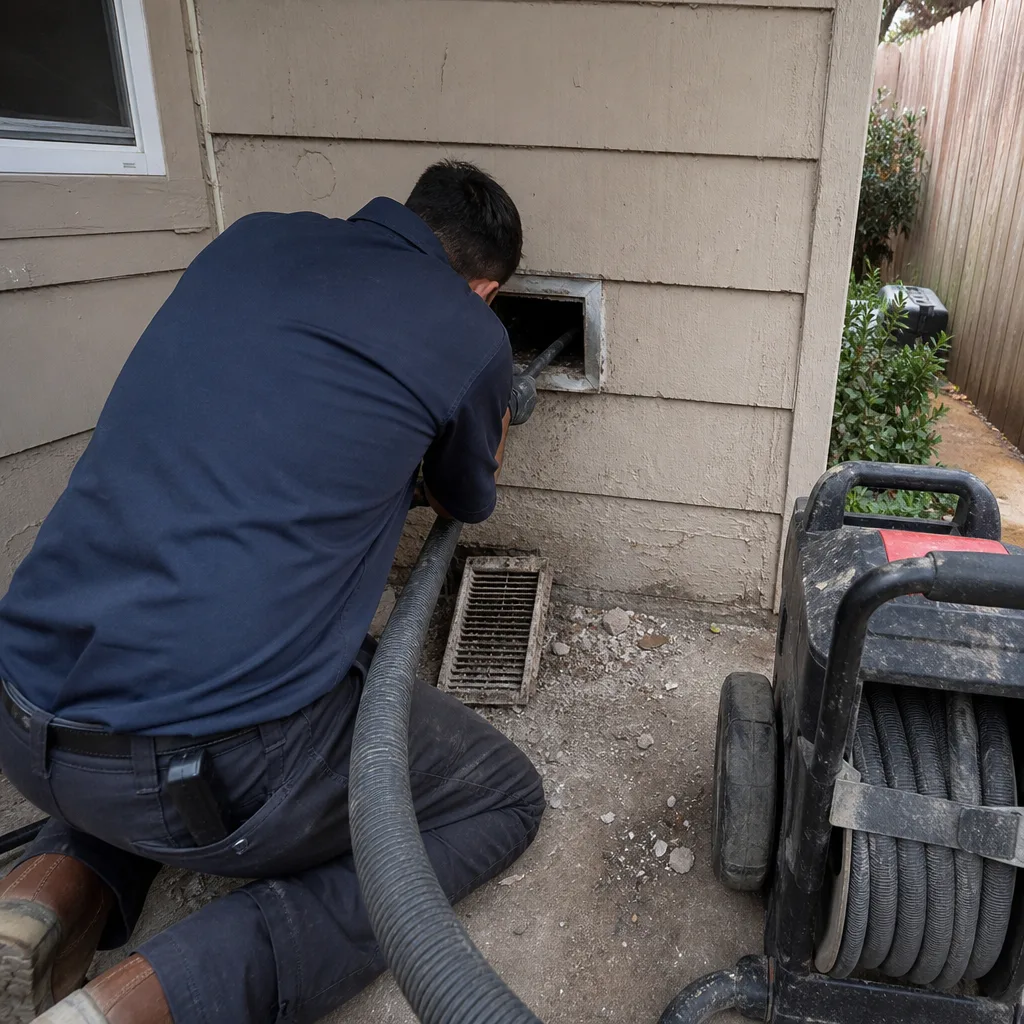
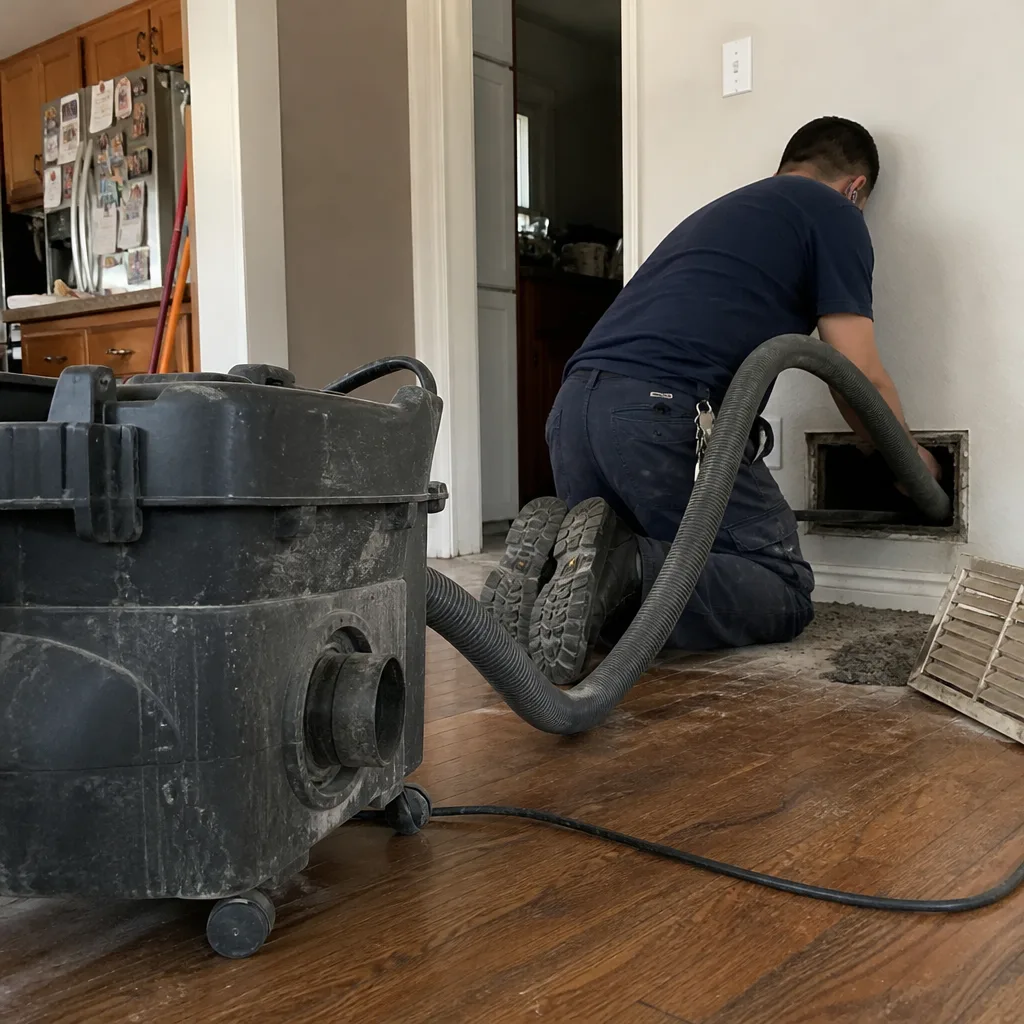
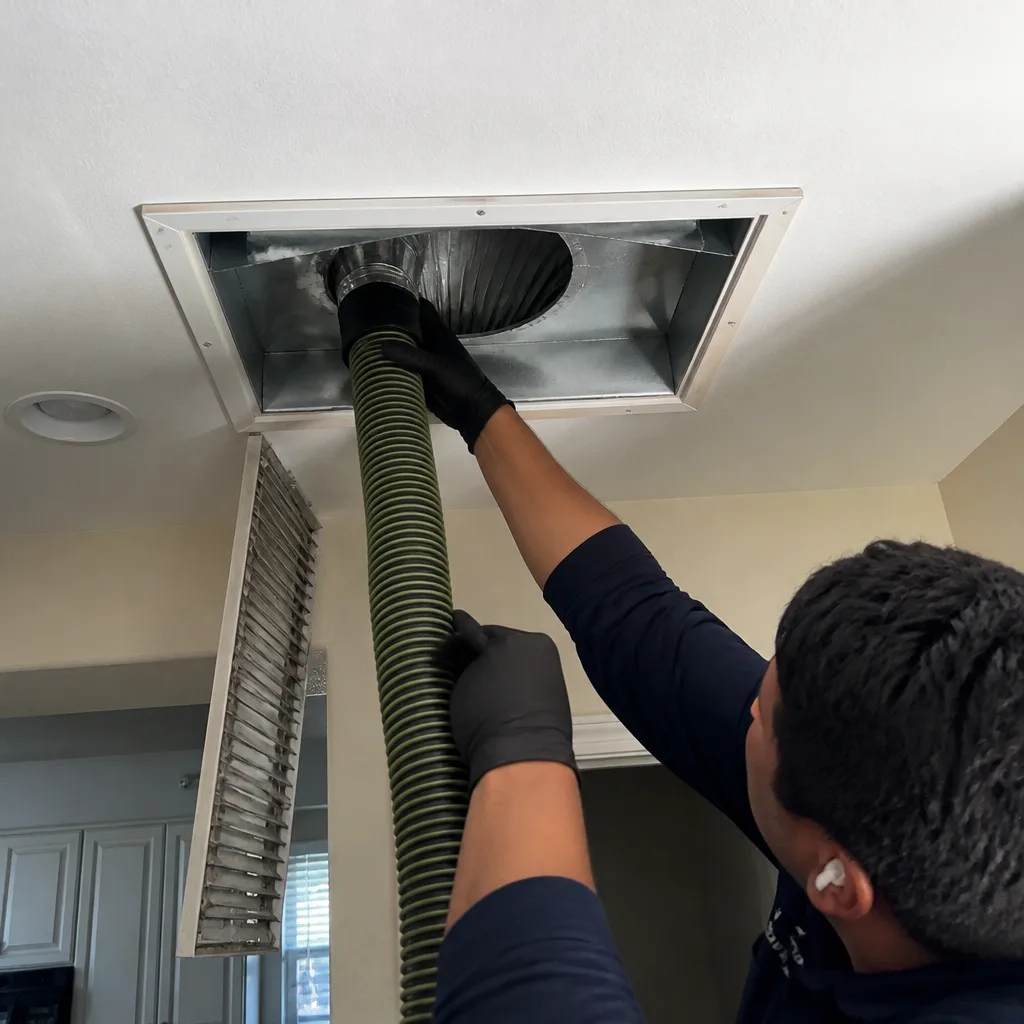
Most of what’s inside your ducts is stuck to the duct walls. That’s the part most homeowners don’t realize. A basic shop vac attached to a register can remove loose debris near the opening, but it can’t dislodge the caked particulate that’s been building up across the full length of the duct run. That requires mechanical agitation – a rotating brush head that makes contact with the duct walls and physically loosens the buildup while a HEPA-rated vacuum system extracts it under negative pressure.
That’s the Rotobrush approach, and it’s the standard we use on every cleaning in La Mesa. The rotary brush is not an improvized tool; it’s purpose-built for duct interiors, sized to fit the duct dimensions, and driven through the system while the vacuum side runs simultaneously. The debris never has a chance to become airborne in the living space because the extraction is happening in real time at the point of agitation.
What changes the result is the containment layer. On significant jobs – post-fire season, rodent contamination, extended neglect – the vacuum needs to operate under negative air pressure so that nothing escapes through gaps or joints while the brushes are working. Abatement Technologies builds negative-air containment systems for professional remediation projects, and that’s the same standard we apply to duct cleaning. It means the system is under controlled negative pressure for the duration of the cleaning, and the air leaving the vacuum passes through filtration rated for the task.
Two other equipment points worth knowing:
- Nikro HEPA-rated extraction ensures the vacuum side of the process doesn’t redistribute the particulate it captures. In a home with allergy triggers or post-renovation dust, this is the difference between cleaning the ducts and moving dust around inside them.
- Honeywell and Aprilaire brand familiarity matters because it indicates system compatibility. If you have a Honeywell media cabinet or an Aprilaire filter housing installed, the duct cleaning approach should account for it. These are precision-fitted components, and proper cleaning works around them rather than bypassing them.
Here’s the practical takeaway for a La Mesa homeowner: the equipment determines what actually leaves your house. A contractor without mechanical agitation and HEPA extraction is doing a visual improvement, not a cleaning. The goal is the removal of accumulated material from the full length of the duct system, not just the first six inches of the register boot.
Common Mistakes to Avoid
- Cleaning on a fixed four-season schedule. La Mesa doesn’t have four seasons in the HVAC sense. Cleaning in January because “it’s winter” ignores the fact that fire season already deposited the year’s worst contamination in September and October. Clean around local events: pre-fire season, post-significant wind events, and as-needed after inspections.
- Treating duct cleaning as a onetime fix. Ducts re-contaminate because they process the air in your home every day. A cleaning resets the accumulation, but it doesn’t stop future accumulation. Schedule around La Mesa’s stress periods rather than expecting one cleaning to last indefinitely.
- Using a higher-MERV filter as a substitute for cleaning. A MERV 13 filter stops fine particulate from entering the system, but it doesn’t remove what’s already on the duct walls. In fact, a restrictive filter on a dirty system can reduce airflow enough to strain the blower motor.
- Assuming the marine layer means mold. Most dark clumping in La Mesa ducts is moisture-absorbed dust, not microbial growth. Don’t panic. Do have it inspected – the distinction matters, because mold remediation and dust cleaning are very different jobs.
- Ignoring ducts after visible smoke or dust events. A wind event that coats your patio furniture with dust has also pulled dust through your return air. Waiting for the “annual cleaning” means the particulate compacts and becomes harder to remove.
- Concerned only about airflow, not air quality. Restricted airflow gets attention because it shows up on the utility bill. But the same accumulation restricting airflow is also the material being circulated back into living spaces. The cost of dirty ducts is both comfort and health. They’re the same problem.
- Buying a cleaning without verifying what’s actually done. Ask whether the company uses mechanical agitation and HEPA extraction, and whether the work is done under negative pressure. If the answer is vague, keep looking.
When to Call a Professional
Call a professional when visible indicators suggest your system has crossed from routine maintenance into actual contamination. That means: visible dust accumulation at register edges and return grilles that persists after replacement; startup smells that suggest settled particulate; rodent droppings or insulation damage in the attic near duct runs; post-wildfire or post-wind event filter darkening that keeps recurring; or a cleaning history longer than three years in a home with pets, recent renovation, or allergy symptoms. These are the calls we take most often from La Mesa homeowners. Duct Cleaning La Mesa offers free estimates in La Mesa – call (833) 589-9836 for an assessment of your system’s current condition.
Frequently Asked Questions
Air duct cleaning in La Mesa typically runs between $400 and $900 for a whole-home system, depending on the number of supply runs, the overall system size, and the severity of the buildup. Homes with rodent contamination, post-renovation dust, or long-cleaning intervals trend toward the higher end. The price should be a flat rate per system, not a per-vent fee that grows once the technician arrives. Call (833) 589-9836 for a specific quote based on your home’s layout – estimates are free.
Cheaper quotes usually reflect a difference in equipment and process, not just overhead. A basic shop-vac-and-brush approach costs less because it does less – it removes loose debris near the register openings but doesn’t agitate and extract buildup from the full duct run. Professional equipment like Rotobrush rotary brushes with Nikro HEPA extraction costs more to operate because it actually removes the caked-on material from duct walls. The price difference is the difference between a visual touch-up and a cleaning. Call (833) 589-9836 to understand what your quote actually covers.
Ask for before-and-after photos of the interior of the ducts, specifically of the return plenum and the farthest supply runs. A legitimate cleaning will show visible difference in these locations. Also ask what type of equipment was used – mechanical agitation with HEPA extraction should be a specific answer, not a vague description. If you can’t get specific answers about equipment and process, keep looking. If you want to see the difference in your own system, call (833) 589-9836 and we’ll show you before-and-after documentation on your own ducts.
Every three to five years is the realistic interval for most La Mesa homes, with two exceptions. Homes with significant wildfire smoke exposure may need cleaning sooner, sometimes within a year if two or more red flag periods passed through the system. Homes with rodent activity, renovation debris, or occupants with respiratory conditions may also need shorter intervals. The honest answer is that ducts need cleaning when inspection shows accumulation, not on a fixed calendar. Call (833) 589-9836 and we’ll assess where your system stands.
You can replace filters, clean register covers, and vacuum the visible interior of boots. You cannot clean the full length of the duct runs yourself because the buildup is mechanically bonded to the duct walls and requires rotary agitation under negative pressure to remove safely. The risk of DIY attempts is that they loosen material without extracting it, which means the particulate becomes airborne in your living space later. For anything beyond filter replacement, use a professional with the right equipment. Call (833) 589-9836 if you want to understand what’s in your ducts before attempting anything yourself.
The best time in La Mesa is late August through September, before the first Santa Ana wind event of the season. This cleans the system before wildfire smoke arrives, rather than attempting to clean smoke particulate out after it has compacted into the existing accumulation. Spring is a secondary window for homes in marine-layer-influenced neighborhoods or with significant winter dust buildup. Summer cleaning is workable and sometimes necessary after significant events. Call (833) 589-9836 to schedule your cleaning during the window that matters most for your home.
The Bottom Line
La Mesa’s duct systems face a specific stress pattern: wildfire and Santa Ana particulate in the fall, marine layer humidity in the spring, and extended cooling runtime in the summer. The homeowner’s job is to match the cleaning interval to these events, not to a generic seasonal calendar. Pre-fire season is the priority window. Post-wind-event inspection tells you when unscheduled cleaning is justified. Spring is about moisture awareness, not automatic cleaning. And summer is about not letting restricted airflow compound cooling costs. With the right schedule and the right equipment – rotary brush agitation, HEPA extraction, and negative air containment – your ducts stay clear and your indoor air stays cleaner through every season La Mesa actually has. For more guides & resources on maintaining your home’s air quality, explore our blog.
Written by the team at Duct Cleaning La Mesa, serving La Mesa since 2012.
See the difference
 Before
 After
 Before
 After
 Before
 After