Last updated November 2, 2026
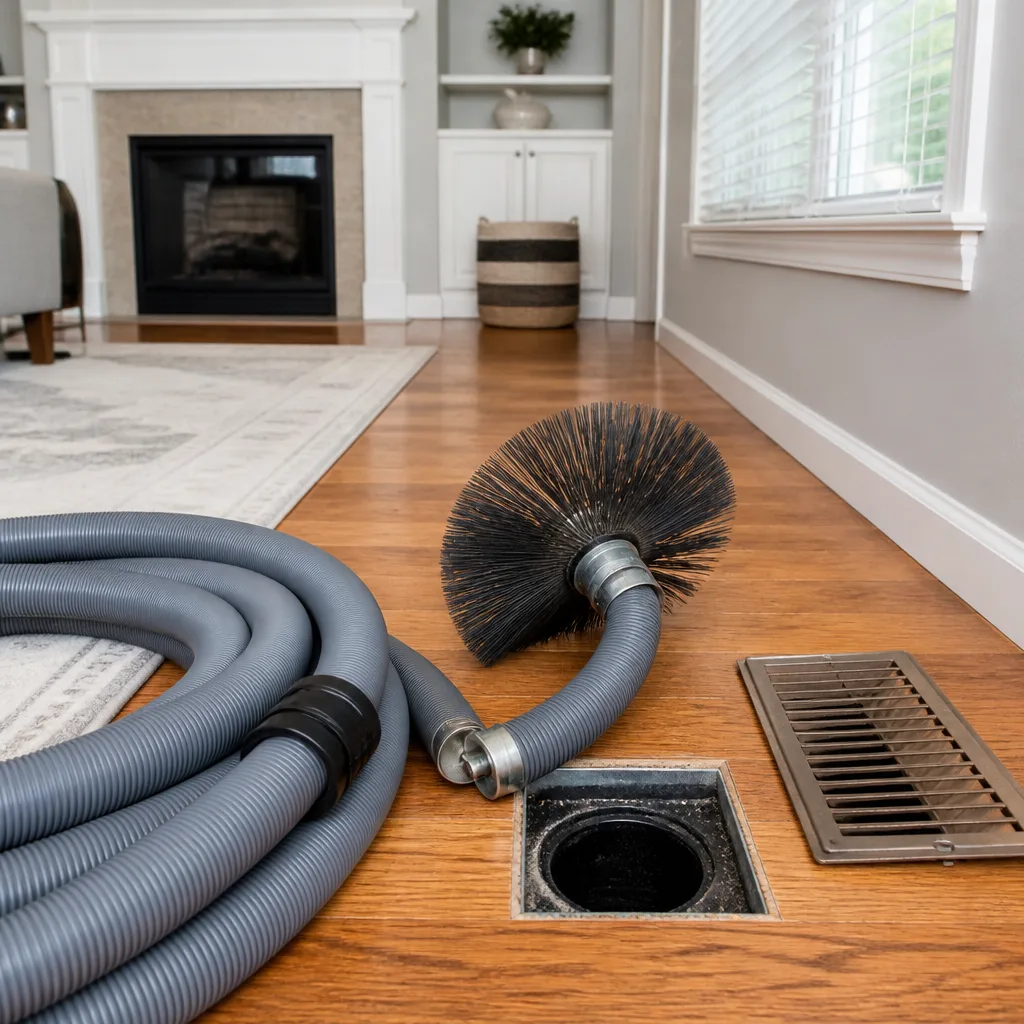 Whole-home duct cleaning
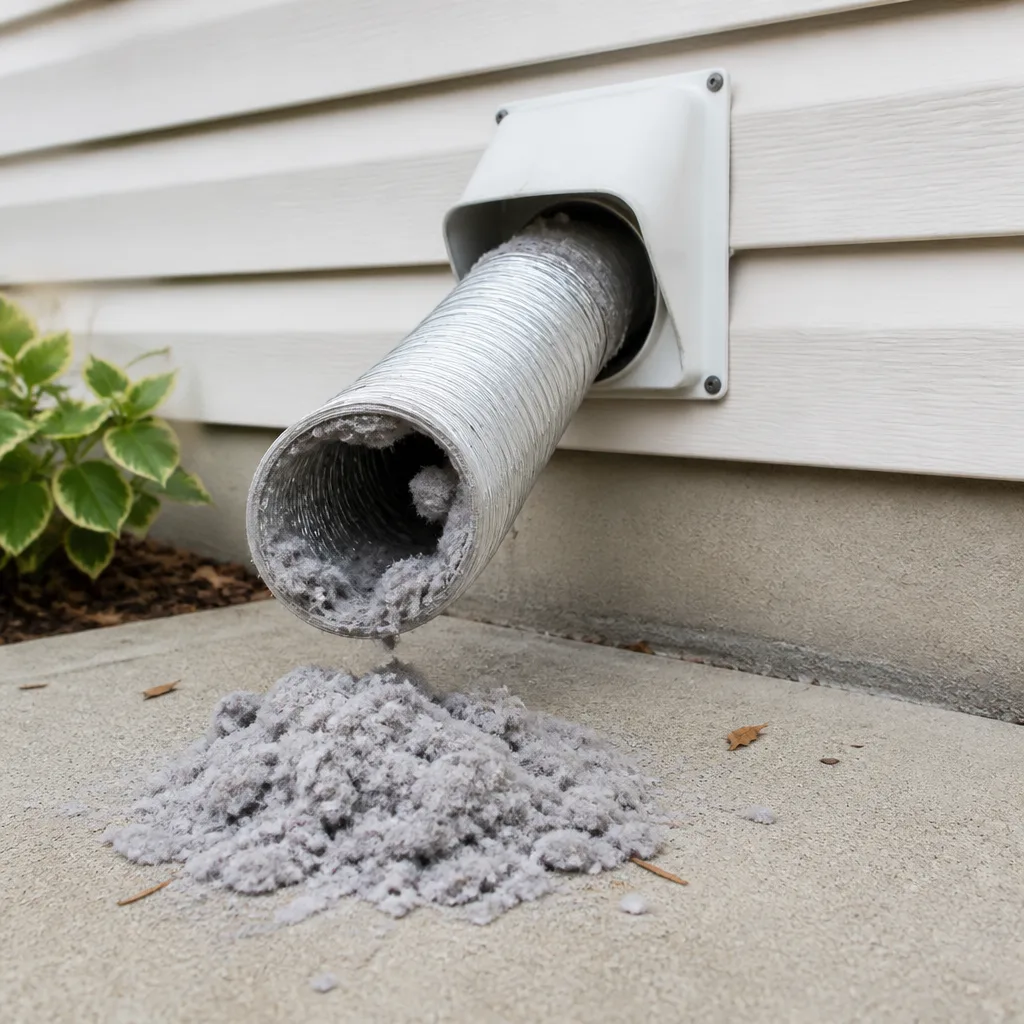 Dryer vent cleaning
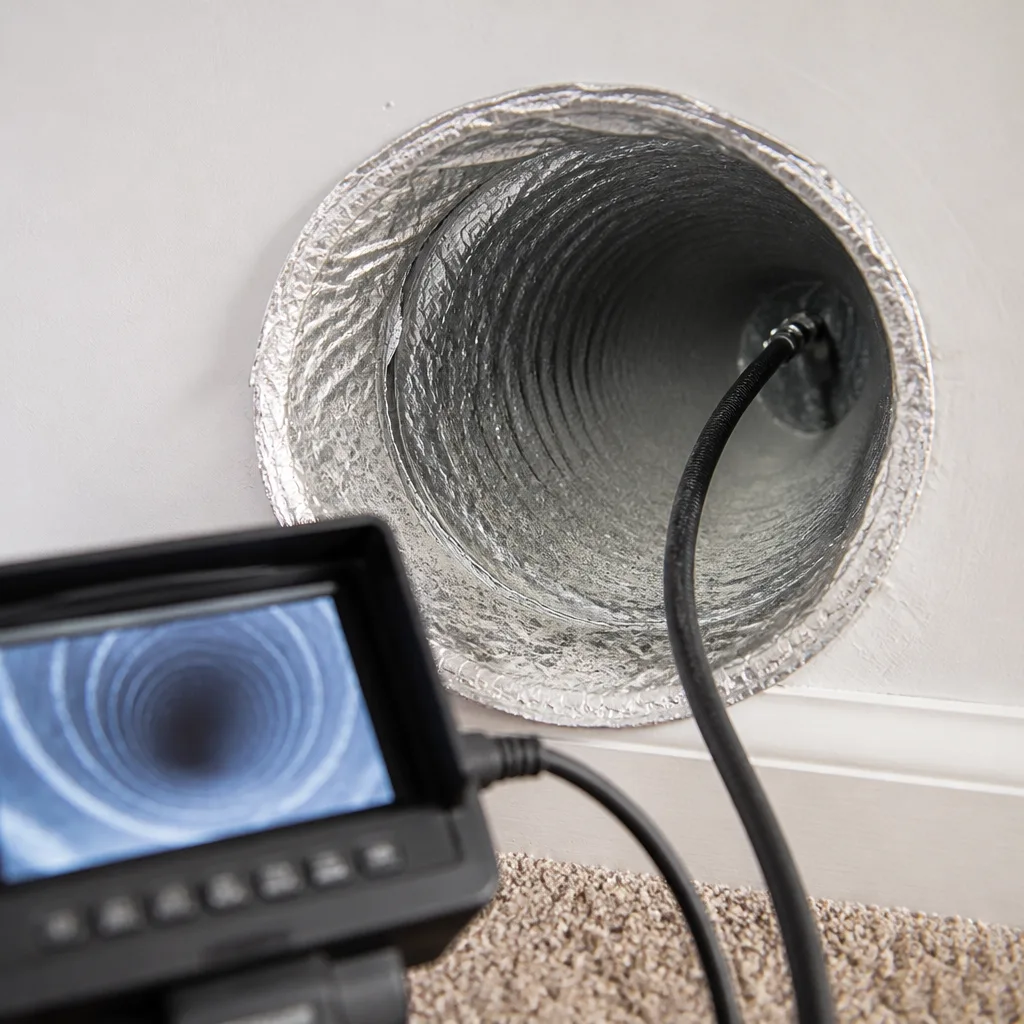 Camera inspection
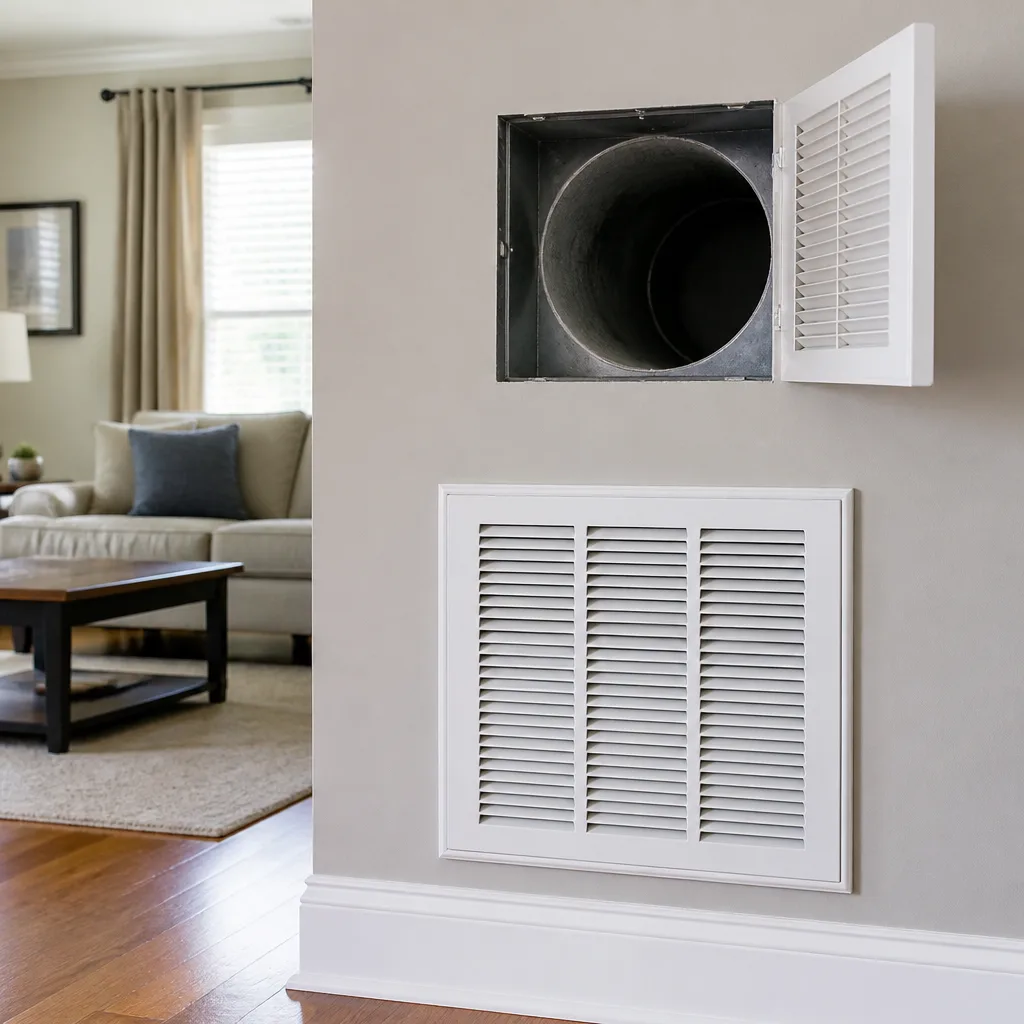 Sanitizing & deodorizing
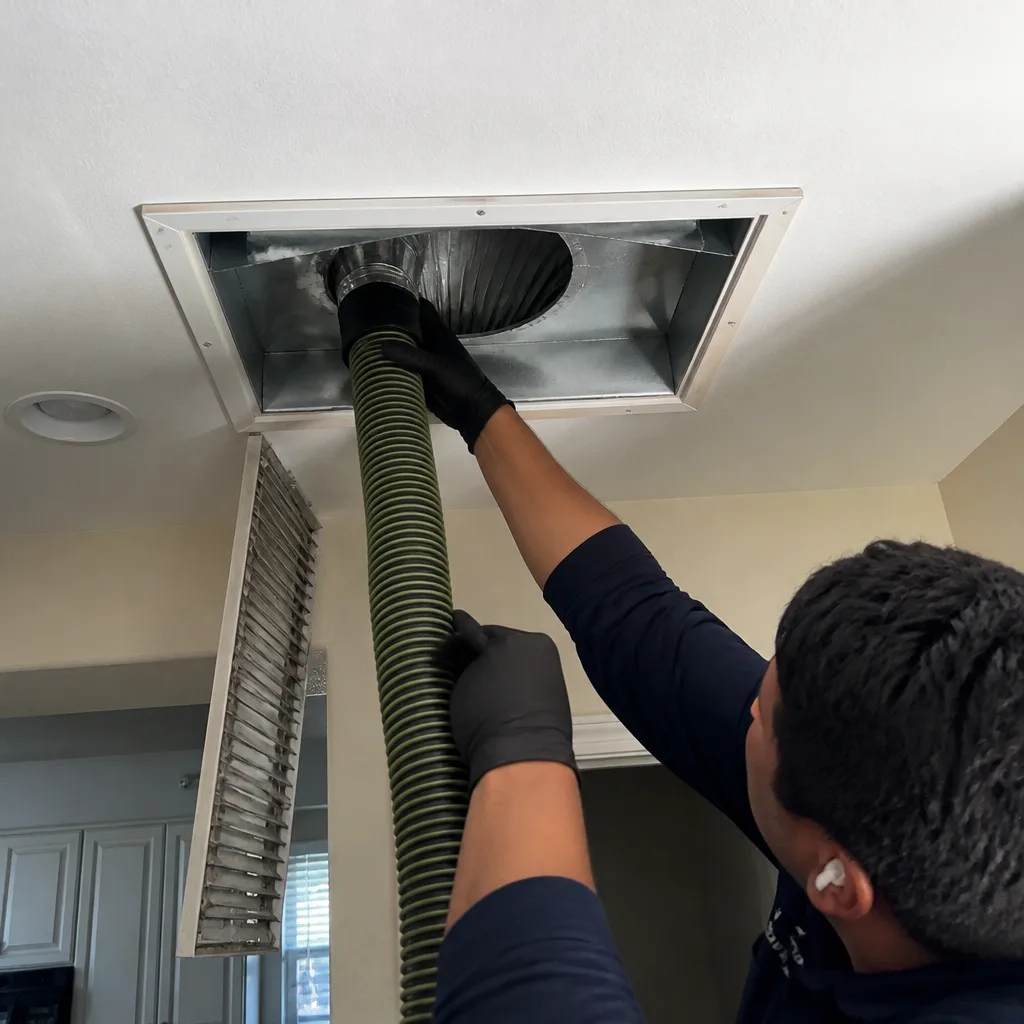
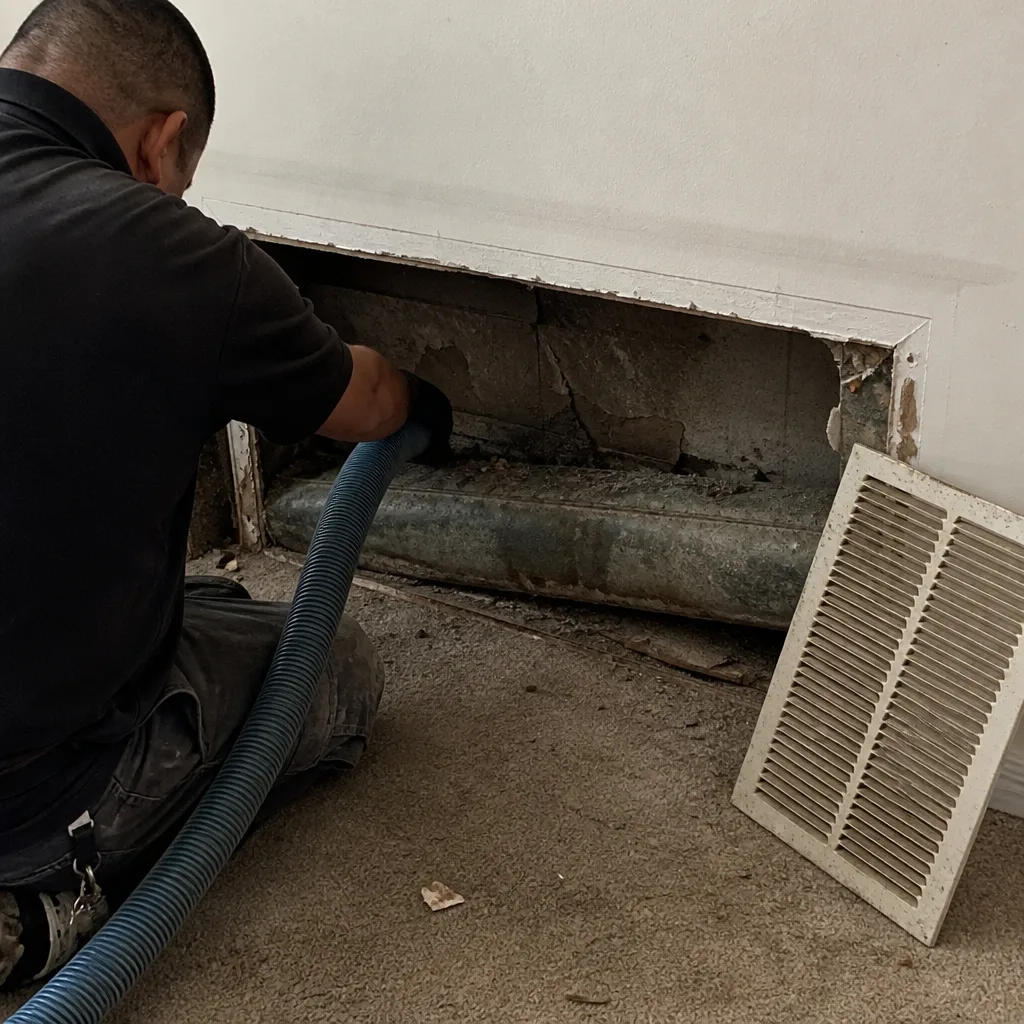
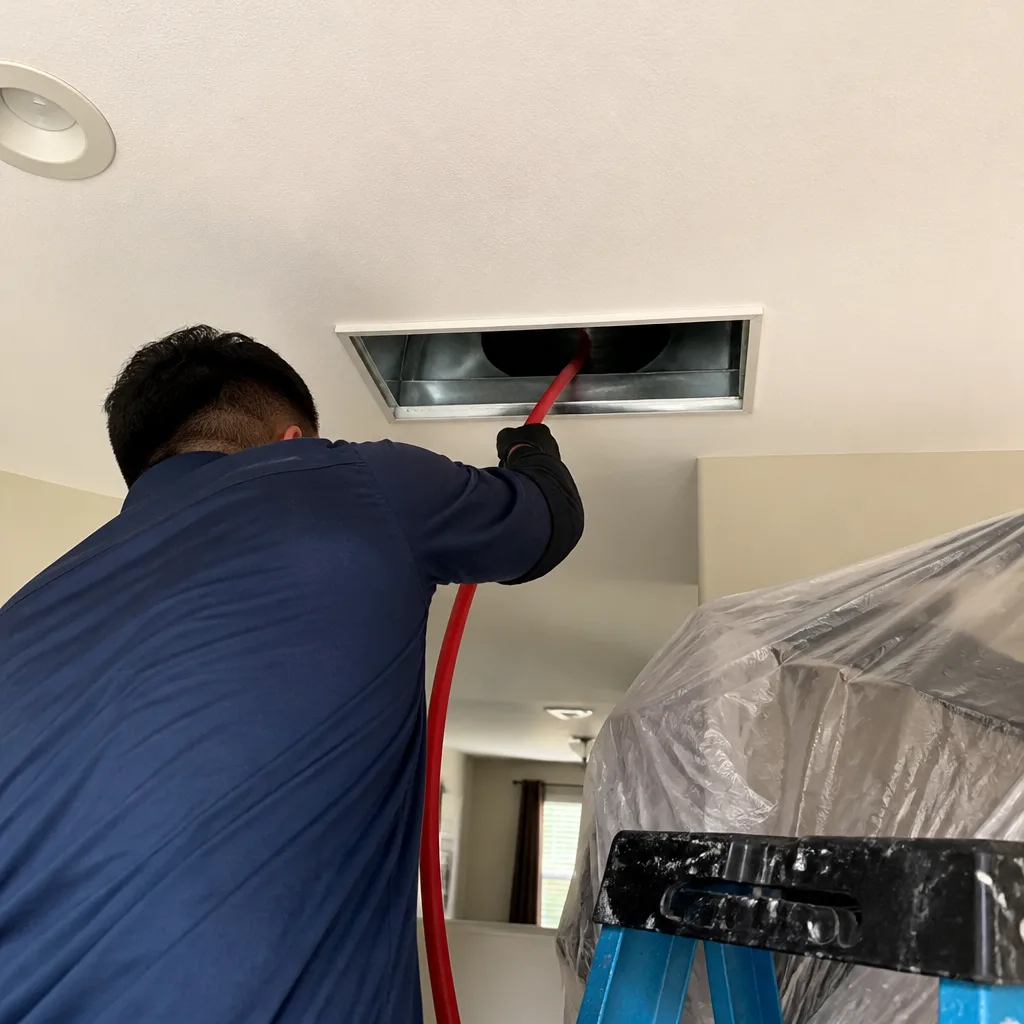
Whole-system duct and dryer vent check with before-and-after photos - you see exactly what came out of your vents
That "$99 whole-house special" is a bait ad - the real number appears once they are in your hallway, or the "clean" is a shop-vac at the register. We photograph the inside of your ducts before and after instead.
Choosing the Right Air Duct Cleaning Brand: A Buyer’s Guide for La Mesa
Most homeowners in La Mesa assume every duct cleaning company is doing roughly the same thing. They’re not. The difference between a contractor who owns a Rotobrush system and one who arrives with a portable shop vacuum is not a matter of degree. It’s a difference in what physically happens inside your ductwork. We’re going to walk through the three equipment platforms used by serious our Air Duct Cleaning services contractors, what each one actually does, how to verify a company owns what they claim, and what equipment tells you about whether a La Mesa contractor can also repair ducts rather than just clean them.
Quick Answer
The right air duct cleaning brand in La Mesa is not a single name but a combination of equipment systems: a Rotobrush rotary-brush extraction unit for agitating debris off duct walls, Nikro negative-air equipment with HEPA filtration to capture that debris, and ideally Abatement Technologies containment for homes with significant contamination. A contractor who owns all three and carries duct repair materials is operating a different service than a crew with a portable vacuum. What matters most is verifying the equipment is owned by the company, not rented, and that it’s actually on the truck when they arrive.
Styles & brands we work with
- Whole-home duct cleaning
- Dryer vent cleaning
- Camera inspection
- Sanitizing & deodorizing
Table of Contents
- What the Major Equipment Brands Actually Do
- Why Equipment Determines Scope of Work
- How to Verify a Contractor’s Equipment Claims
- What Equipment Investment Reveals About a Company
- What Equipment Selection Tells You About Repair Capability
- La Mesa-Specific Considerations
What the Major Equipment Brands Actually Do
Let’s start with a technical fact most more guides & resources skip. Rotobrush International developed its brushing system because static negative pressure alone, the classic vacuum-only approach, leaves debris adhered to duct walls. In a typical La Mesa home, years of dust, pet dander, and construction debris build up as a film on the interior surface of the duct. A vacuum creates suction but no mechanical agitation. The film stays. Rotobrush combines a rotating brush head with simultaneous vacuum extraction, which dislodges and removes material in a single pass.
Nikro serves a different role. Nikro equipment creates negative pressure inside the duct system and pushes captured air through HEPA filtration. In practical terms, this means particles dislodged during cleaning do not re-enter the living spaces of your home. For a homeowner in La Mesa who is specifically concerned about allergens, the HEPA stage is the difference between relocating dust and actually removing it from the house.
Abatement Technologies is the third piece, and it’s the one most cleaning-only companies don’t own. This is containment equipment: it isolates the area being worked on and captures airborne particulates at the source. It’s the same standard used in professional mold remediation and asbestos abatement. When a duct system in an older La Mesa home shows signs of significant contamination, containment prevents cross-contamination of adjacent rooms during the cleaning process.
Here’s how the three systems divide the work:
- Rotobrush: Agitation plus vacuum. The brush rotates against duct walls while suction removes loosened debris. Designed for branch runs, turns, and registers accessed from the trunk side.
- Nikro: Negative pressure and HEPA filtration. Contains the air inside the duct during cleaning so particles can’t escape into living spaces. Essential for homes where indoor air quality is the reason for the call.
- Abatement Technologies: Containment and remediation control. Isolates work zones and captures airborne contaminants. Matters for heavily soiled systems, recent renovations, or homes with mold concerns in the HVAC system.
None of these are interchangeable. A contractor running all three has the equipment to handle the full range of residential duct conditions found across La Mesa. A contractor running one can only do part of the job.
Why Equipment Determines Scope of Work
Scope of work is set by what the equipment can physically access. This is the point where brand stops being a marketing label and becomes a mechanical constraint.
A portable vacuum connected to a single access point can clean the section of duct directly adjacent to that opening. It can’t turn corners. It can’t reach branch runs. It can’t push a brush head from the trunk side down a lateral run to the register. It simply doesn’t have the reach or the mechanical agitation to do those things.
A Rotobrush system is designed for exactly that geometry. The rotary brush travels down branch runs from the main trunk, agitating debris along the full length of the duct wall while the integrated vacuum extracts at the point of contact. Turns, bends, and register boots are accessible. In La Mesa homes with multiple returns and long lateral runs, this is the difference between cleaning the first three feet of each duct and cleaning the full run.
We’ve seen this in homes across La Mesa: a previous cleaning left visible dust lines exactly at the point where a portable vacuum’s reach ended. Homeowners had paid for a service that was mechanically incapable of covering the full system. The issue wasn’t effort; it was tooling.
Nikro’s negative-pressure role matters here too. When the duct system is sealed except for the access points and the Nikro unit is pulling air through the system, any debris dislodged by the brush is carried by airflow toward the collection point. Without negative pressure, debris can be pushed into rooms through registers rather than pulled toward the vacuum. The combination of agitation plus controlled airflow is what produces a measurable result.
Key takeaway: Equipment type determines not just how well the job is done, but which parts of the duct system get done at all.
How to Verify a Contractor’s Equipment Claims
This is the section most competitors don’t publish, because it teaches you how to see through their marketing. A brand name on a website is free. The equipment behind it is not. Here’s how to verify what a La Mesa duct cleaning company actually runs.
- Ask for the equipment list in writing before the visit. A contractor who owns Rotobrush, Nikro, or Abatement Technologies equipment will list model names and descriptions without hesitation. A contractor who hesitates or gives vague answers like “commercial-grade equipment” is likely not running what they claim.
- Check for brand affiliation evidence. Equipment manufacturers maintain contractor directories and certification records. If a company says they run Rotobrush, ask when they purchased the unit and whether you can see it. Ask where they bought it. Legitimate owners know their purchase history.
- Look at the truck when it arrives. Rotobrush and Nikro systems are not portable vacuums. They are truck-mounted or large trailer-mounted units with significant physical presence. If the crew arrives with a small van and a shop vac, they are not running the equipment they advertised.
- Ask who operates the equipment. Rotobrush and Nikro systems require training to operate correctly. Ask who was trained, by whom, and when. A trained operator can explain why they use a specific brush head on a specific duct type. A rental crew cannot.
- Verify ownership, not rental. Some companies rent equipment for a job or a season. Renting Nikro equipment does not make a company a Nikro account holder. Ask directly: “Do you own your Rotobrush system, or do you rent it?” The answer tells you about their capital commitment and their long-term presence in La Mesa.
- Check for repair materials on the truck. Contractors who carry duct repair materials, mastic, sheet metal, patching, sealing supplies, are structurally different from cleaning-only crews. Repair capability means they can address what cleaning reveals. We’ll return to this below.
We don’t share this to be difficult. We share it because a homeowner in La Mesa paid for a Rotobrush cleaning and got a rented portable vacuum. The invoice said one thing; the truck said another. You have a right to know what’s actually going to pull up to your house.
What Equipment Investment Reveals About a Company
Equipment cost is a signal most consumers don’t think to read. A contractor who owns a Rotobrush system, a Nikro HEPA negative-air unit, and Abatement Technologies containment has made a capital commitment in the $15,000 to $40,000 range, before training costs. That’s a meaningful investment, not a discretionary purchase.
Now think about what that investment means for how the company operates. A business that has spent $30,000 on equipment is not running a discount coupon operation. They’re not going to advertise a $49 whole-house cleaning and then upsell you aggressively to make the job profitable. The economics don’t work that way.
Discount duct cleaners operate on a different model: low upfront price, minimal equipment, and aggressive upselling once the technician is inside the house. The low price works because they don’t carry the capital burden of professional equipment. They can charge less because they’re doing less.
In La Mesa, this distinction plays out in the difference between companies that quote flat-rate whole-system pricing and companies that quote per-vent or per-return pricing that balloons as the job progresses. One model is built on equipment capability; the other is built on finding reasons to add cost.
This is also where Dryer Vent Cleaning in La Mesa comes into the picture. A contractor who has invested in professional duct equipment has likely also invested in proper dryer vent tools: rotary brush systems sized for dryer runs, inspection cameras, and vent-specific HEPA vacuums. The capital profile of the company extends across their service lines.
The investment signal cuts the other way too. A company that owns Abatement Technologies containment has made a specific choice to serve homes with contamination concerns: mold, heavy construction dust, vermin debris. That’s not a mass-market purchase. It’s a purchase made because a contractor anticipates jobs that need remediation-level control. It tells you the company has committed to a particular standard of work, not just a particular volume of work.
What Equipment Selection Tells You About Repair Capability
Now we come to the part of the guide that matters most to La Mesa homeowners: the relationship between cleaning equipment and repair capability.
Cleaning-only companies are structurally limited. They can tell you your ducts are dirty. They can clean them. But if the cleaning reveals a disconnected branch run, a crushed section of flex duct, or a register boot that’s separated from the trunk, they have to tell you to call someone else. You’re left with two contractors, two scheduling windows, and two invoices.
A company that carries duct repair materials alongside cleaning equipment is a different kind of business. We carry repair materials as a matter of course: sheet metal, mastic sealant, flex duct, register boots, hangers, and patching materials. When we find damaged ductwork during a cleaning, we can often fix it on the same visit. That’s the difference between a cleaning and a resolution.
Here’s why equipment selection signals repair capability. A contractor who has invested in Rotobrush and Nikro equipment and who carries repair materials has committed to being a duct systems company, not just a cleaning crew. They’re staffed and equipped for the full range of what ductwork requires. A pure-cleaning crew is equipped for one task only.
This matters in La Mesa for a practical reason: our housing stock includes a mix of older homes with rigid sheet-metal ductwork and newer builds with flex duct. Both types develop problems over time. Rigid ducts can develop open joints and rust-out at the seams. Flex duct can sag, kink, or crush. A cleaning-only company can tell you the problem exists; a company with repair capability can fix it.
If you’re evaluating a duct cleaning contractor in La Mesa, ask one question early: “If you find damaged ductwork during the cleaning, can you repair it on the same visit?” The answer tells you more about the company than any piece of marketing copy. Our Air Duct Repair in La Mesa service exists precisely because these two jobs belong together.
La Mesa-Specific Considerations
La Mesa’s climate shapes what accumulates in duct systems differently than coastal or desert communities. Our warm, dry summers mean windows are open for long stretches. That’s good for fresh air, but it means fine dust and pollen from the surrounding hillsides move through the house and into the return ducts. By late summer, many La Mesa homes have built up a measurable layer of particulate on duct walls.
Our relatively mild winters mean HVAC systems see light heating loads but heavy air circulation. That circulation continuously pulls in the same fine particulate that settles on duct surfaces. Homes near Mount Helix or the hillsides above the city tend to see more windblown dust than homes in the flatter areas near downtown. The difference matters when you’re deciding whether a standard cleaning is sufficient or whether you need HEPA-level extraction.
La Mesa’s housing age distribution also shapes the work. Many homes in neighborhoods like the area around Lake Murray, the older streets near La Mesa Boulevard, and the postwar subdivisions throughout the city have duct systems that have never been fully cleaned or sealed. That’s not a judgment; it’s a function of time. Duct systems that have been in service for 30, 40, or 50 years accumulate more than surface dust. They develop degraded insulation, worn sealant, and in some cases, compromised joints.
Here’s what that means for equipment selection. An older La Mesa home with original ductwork may require more than a standard cleaning. It may need major sealing, damaged-section repair, and in some cases, replacement of deteriorated flex runs. A contractor with repair capability and professional-grade extraction equipment can diagnose and address those issues in one visit. A cleaning-only company cannot.
For more detail on how these factors play out in a full cleaning, see our guide to Duct Cleaning La Mesa home services.
Common Mistakes to Avoid
- Choosing a contractor based on the lowest quote. Low price in this industry usually signals portable equipment and per-vent upselling. What looks like savings on the estimate becomes a larger invoice once work begins.
- Accepting a quote without an equipment list. If a La Mesa duct cleaner won’t tell you what equipment they run before the visit, they’re protecting something. Professional contractors volunteer equipment details because that equipment is their credibility.
- Failing to ask about repair capability. Cleaning reveals problems. If your contractor can’t repair what they find, you’re hiring two companies for one job. Ask before you book.
- Assuming all HEPA claims are equal. HEPA is a filtration standard, not a magic word. A true Nikro HEPA negative-air unit captures particles down to 0.3 microns. A portable vacuum with a HEPA filter on the exhaust is not doing the same thing.
- Ignoring the condition of the duct system itself. Cleaning a duct system with separated joints and crushed flex runs is a temporary fix. The system needs repair first or alongside. Contractors who only clean won’t tell you this because they can’t fix it.
- Choosing a company that subcontracts the work. If the company you hired sends a different crew with different equipment than what was advertised, you haven’t verified anything. Ask who will actually show up.
- Treating dryer vents as an afterthought. Clogged dryer vents are a leading residential fire hazard. If you’re having ducts cleaned, have the dryer vent done at the same time by a contractor who owns proper vent-cleaning tools.
See the difference
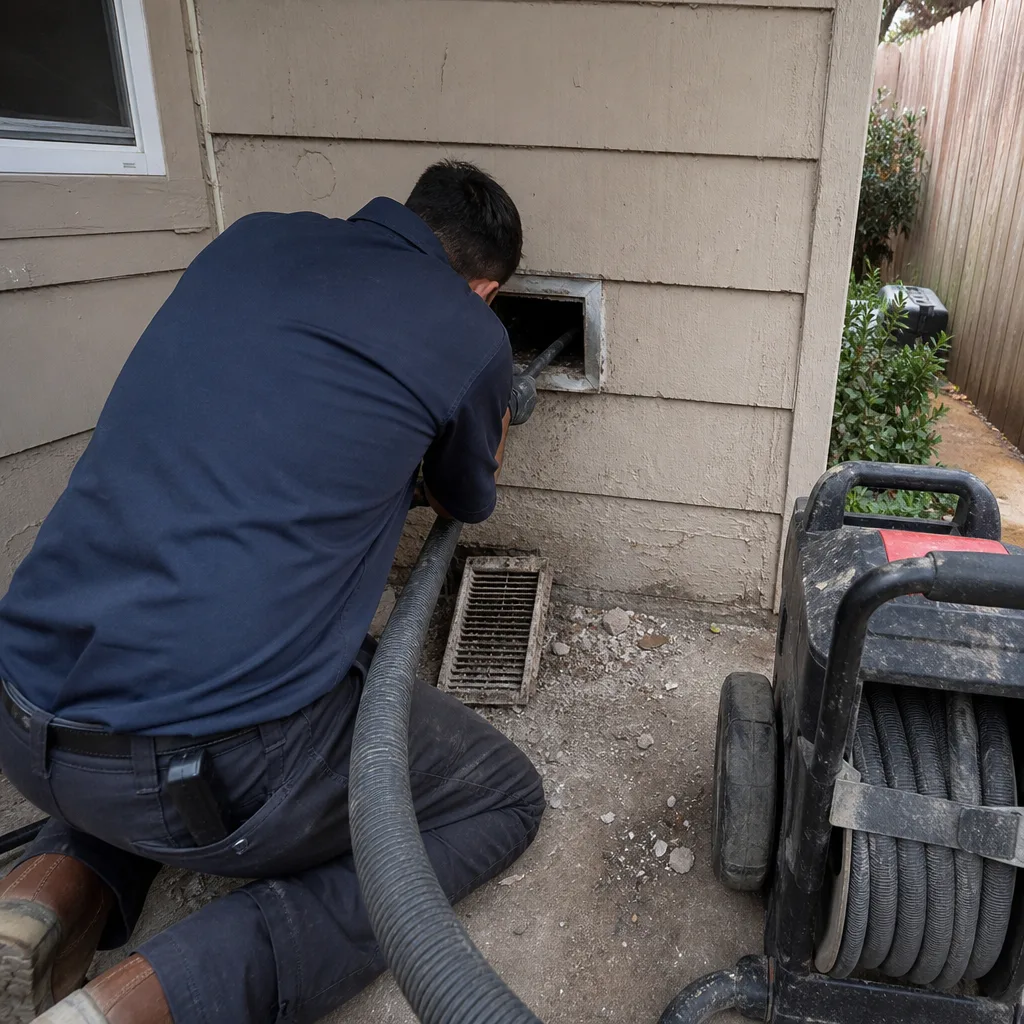 Before
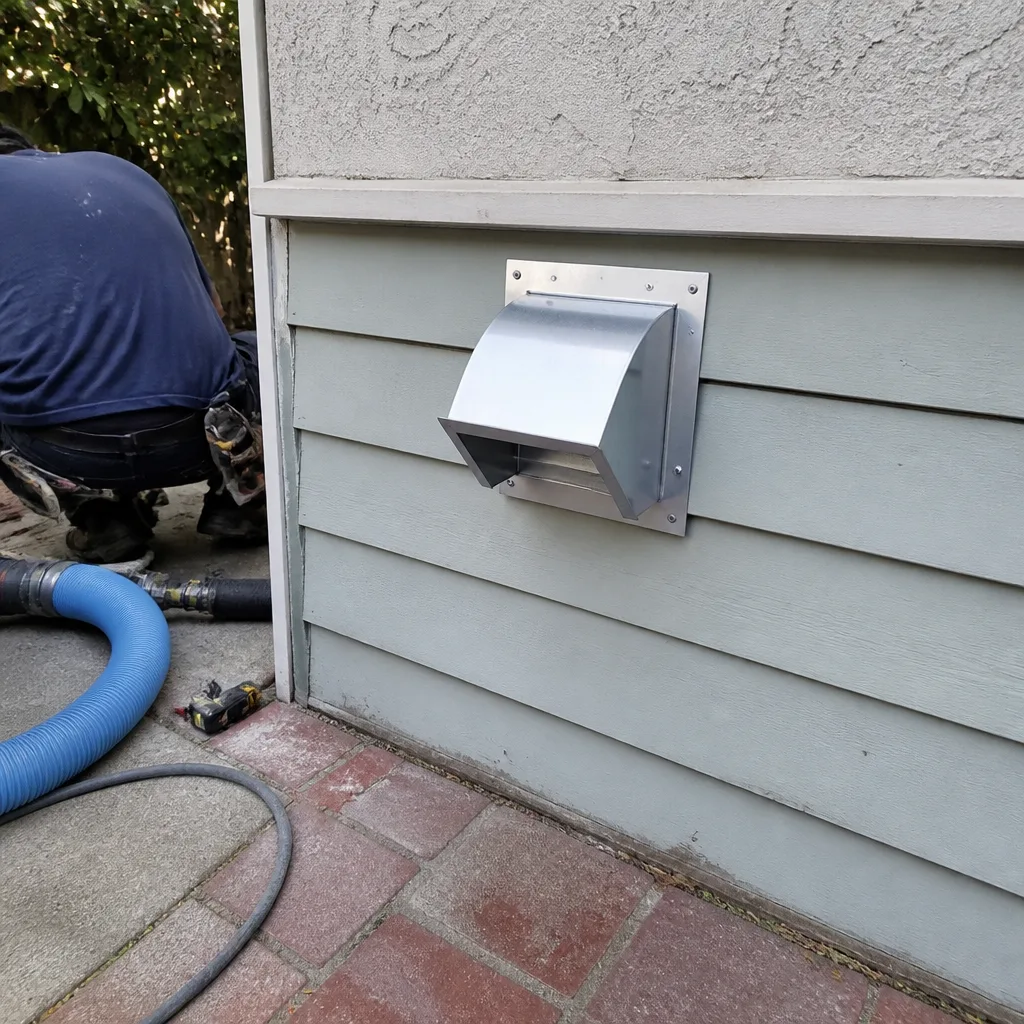 After
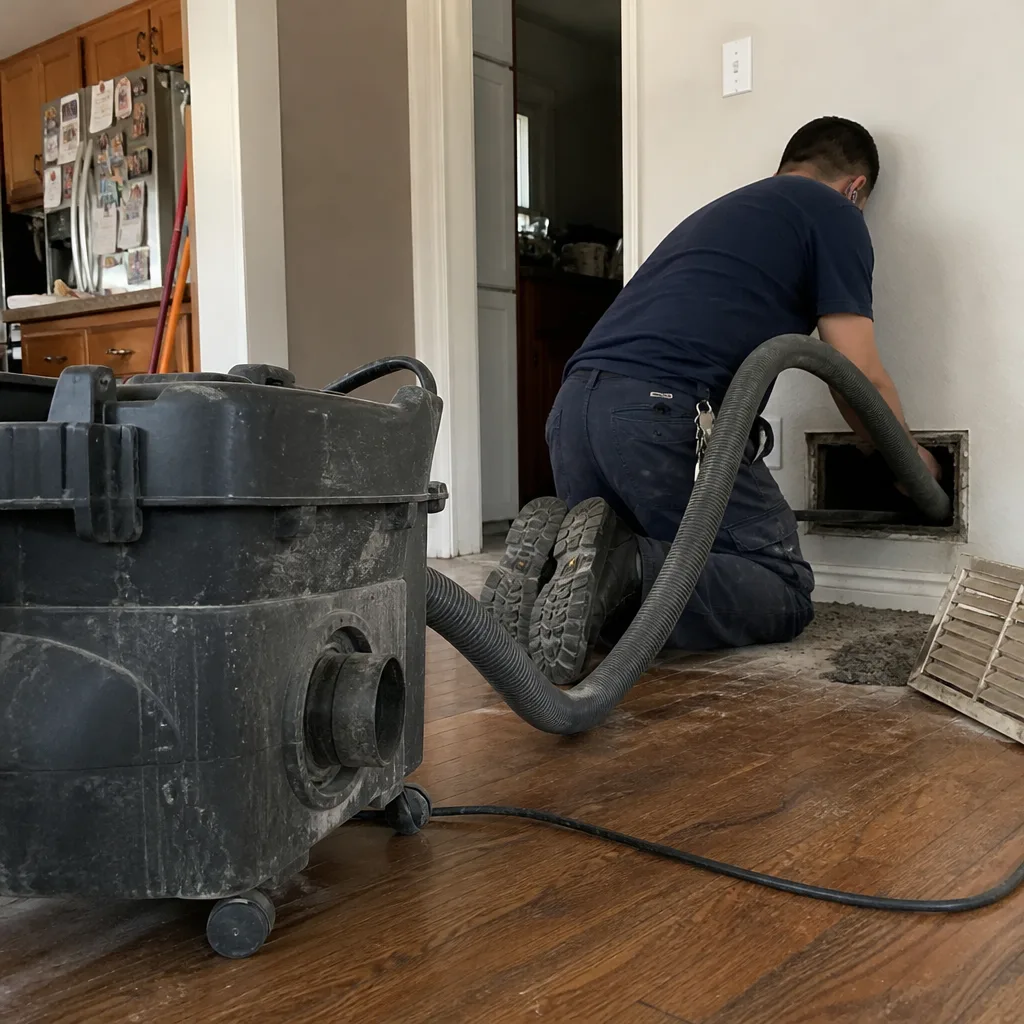 Before
 After
 Before
 After
When to Call a Professional
You should call a professional duct cleaning contractor in La Mesa if you’ve never had your ducts cleaned and the home is more than 10 years old, if you’ve recently completed a renovation that generated drywall or construction dust, if a household member has persistent allergy symptoms that improve away from home, if you can see dust accumulation on register covers, or if your HVAC system is running longer to maintain temperature. You should also call if the previous duct cleaning was done with portable equipment and you’re not confident the full system was reached. Duct Cleaning La Mesa offers free estimates in La Mesa, call (833) 589-9836 to schedule one.
Frequently Asked Questions
Professional whole-system air duct cleaning in La Mesa, including all trunk runs, branch runs, and registers, typically ranges from $350 to $700 depending on home size, system complexity, and the level of contamination. Homes with multiple systems, older ductwork, or contamination that requires containment equipment run on the higher end. The key is to get a flat-rate whole-system quote, not a per-vent price that can balloon. Call (833) 589-9836 for an exact quote, estimates are free.
Cheaper quotes usually reflect cheaper equipment and a different business model. Companies running portable vacuums with minimal capital investment can advertise low prices because they plan to upsell once the technician is inside the home. A contractor who owns Rotobrush and Nikro equipment has made a serious capital commitment and charges a flat rate that reflects the actual work. The low quote and the real quote are for different services.
Ask for before-and-after photos of the inside of your ducts, not just the register covers. A professional contractor running inspection cameras can show you the duct walls before cleaning and after. You should also notice reduced dust accumulation on surfaces and improved airflow from registers. If the contractor can’t produce photos of the interior duct surfaces, you have no way to verify the work.
For most La Mesa homes, every 4 to 7 years is appropriate. Homes with pets, smokers, or family members with significant allergies should lean toward 3 to 5 years. Homes that have undergone renovations should be cleaned immediately after the work is complete, regardless of the calendar. A system in an older home that has never been cleaned should be addressed promptly.
Yes, when done with HEPA-filtration equipment that captures particulates rather than redistributing them. The benefit comes from removing accumulated pollen, dust, and pet dander that re-circulates through the home every time the HVAC system runs. In La Mesa, where outdoor pollen and hillside dust enter homes during open-window seasons, a HEPA-equipped cleaning can meaningfully reduce the particulate load inside the duct system.
Look for three things: professional-grade equipment that you can verify, repair capability alongside cleaning, and a flat-rate whole-system quote. The equipment should include rotary-brush extraction and HEPA negative-air filtration at a minimum. The company should be able to repair damaged ductwork on the same visit. And the quote should be one number for the whole system, agreed before work starts, not a per-vent estimate that changes on the day. Call (833) 589-9836 to discuss your system.
The Bottom Line
Choosing the right air duct cleaning brand in La Mesa comes down to equipment, verification, and structural capability, as detailed in The Complete Air Duct Cleaning Guide for La Mesa Homeowners. Rotobrush equipment provides the agitation-plus-vacuum combination that actually removes adhered debris from duct walls. Nikro equipment provides the HEPA filtration that keeps captured particulates from re-entering living spaces. Abatement Technologies containment extends that control to homes with significant contamination. Verify that the contractor owns the equipment they claim, that it’s on the truck when they arrive, and that they can repair ductwork they find damaged during cleaning. One flat price for the whole system, agreed before work starts. That’s what professional-grade duct cleaning looks like in La Mesa.
Written by the team at Duct Cleaning La Mesa, serving La Mesa since 2012.