
Last updated November 2, 2026
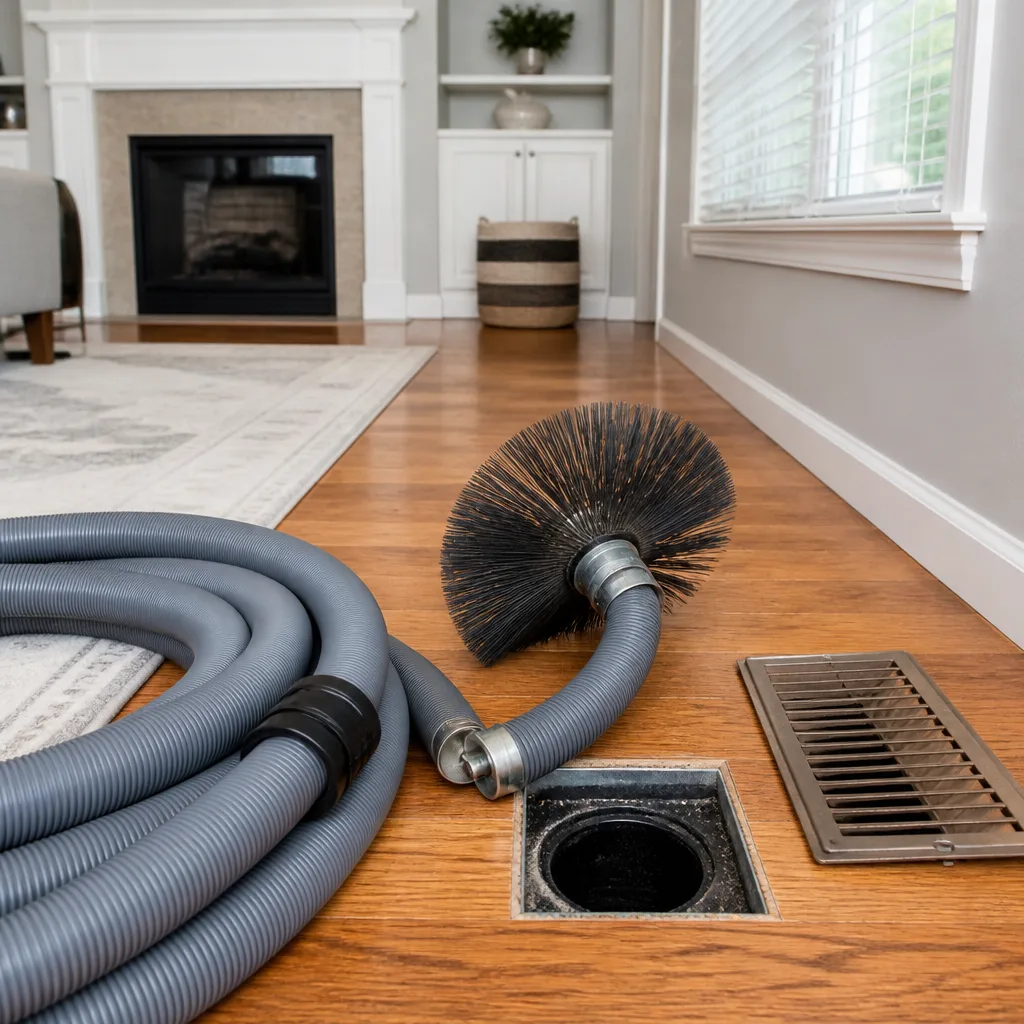 Whole-home duct cleaning
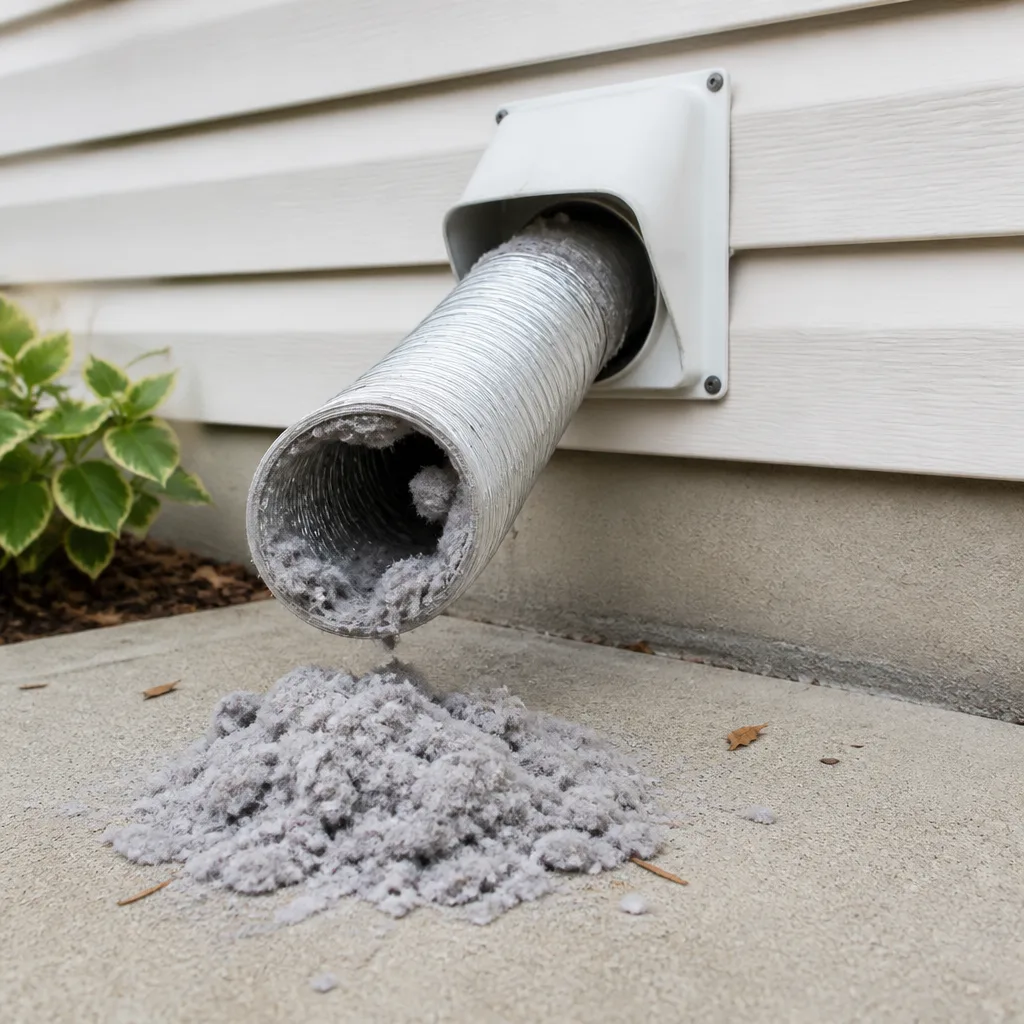 Dryer vent cleaning
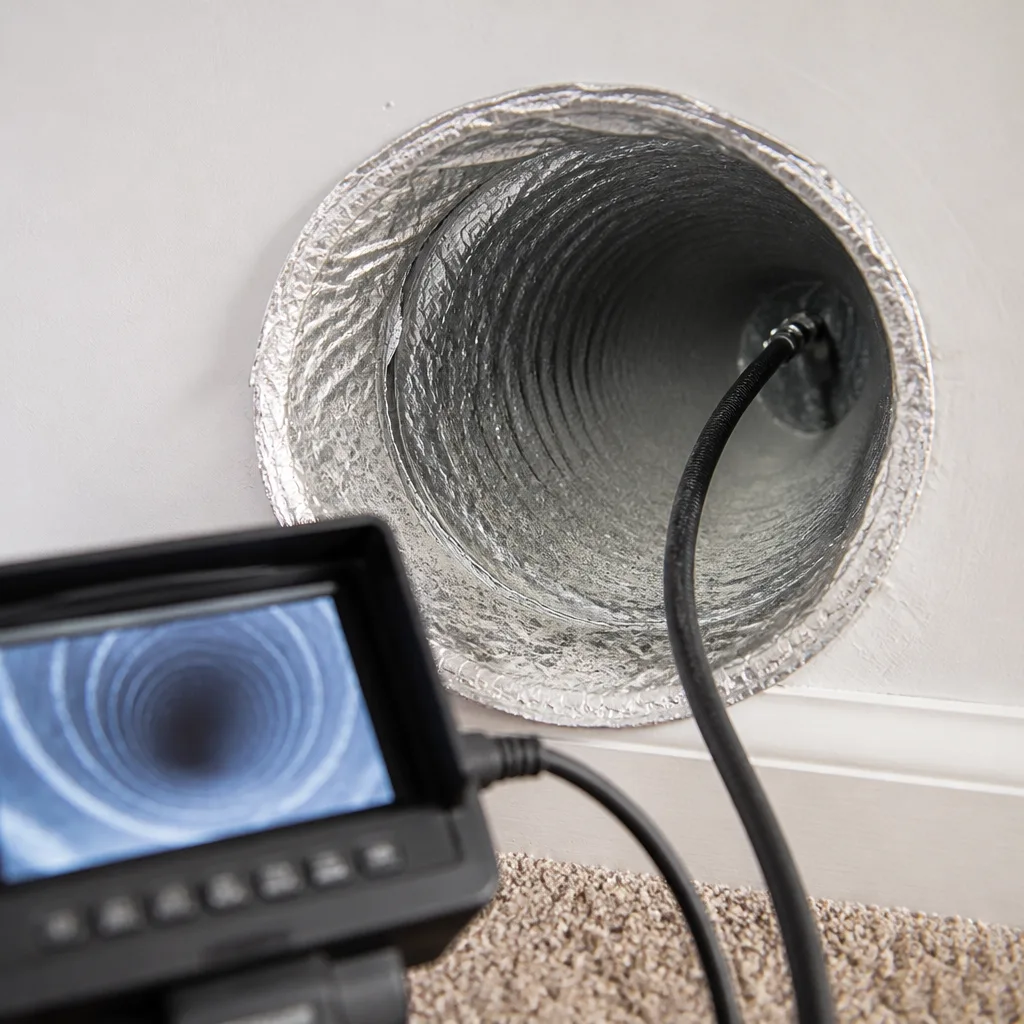 Camera inspection
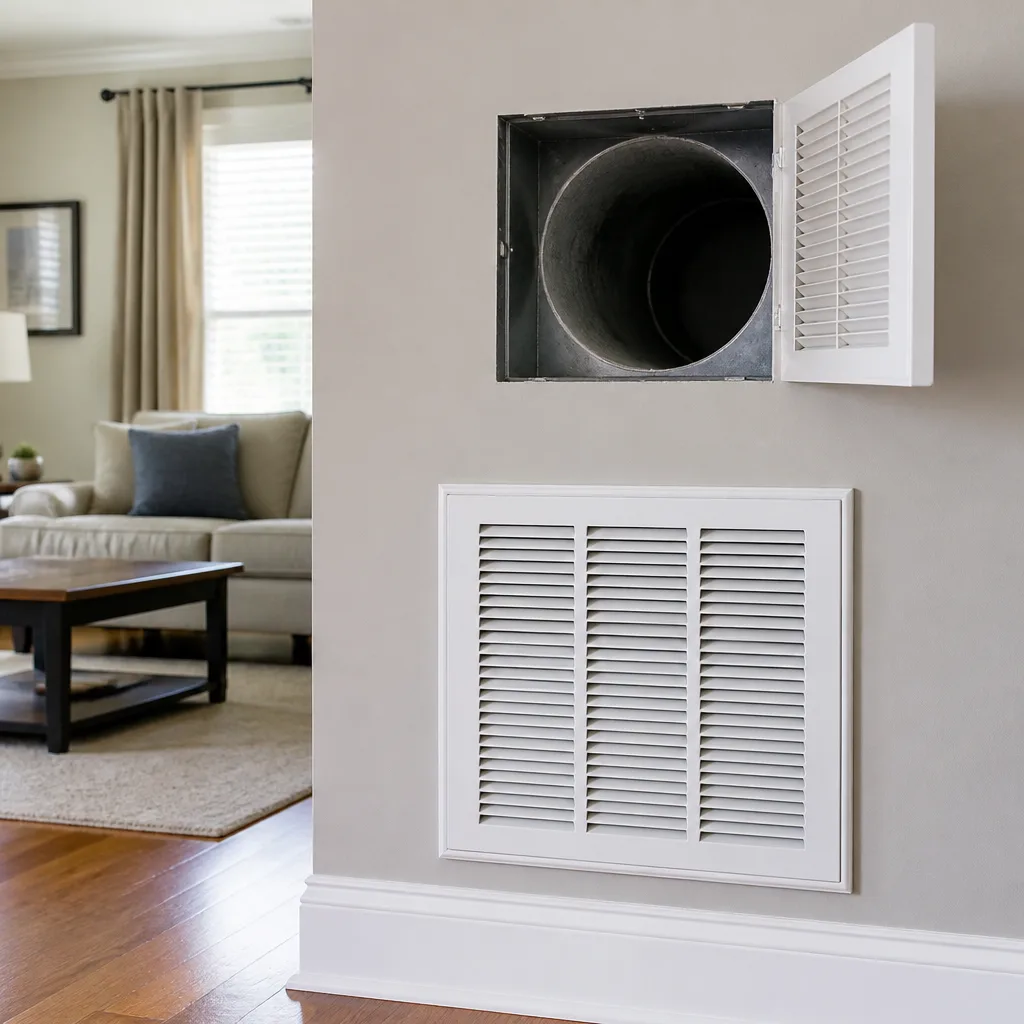 Sanitizing & deodorizing
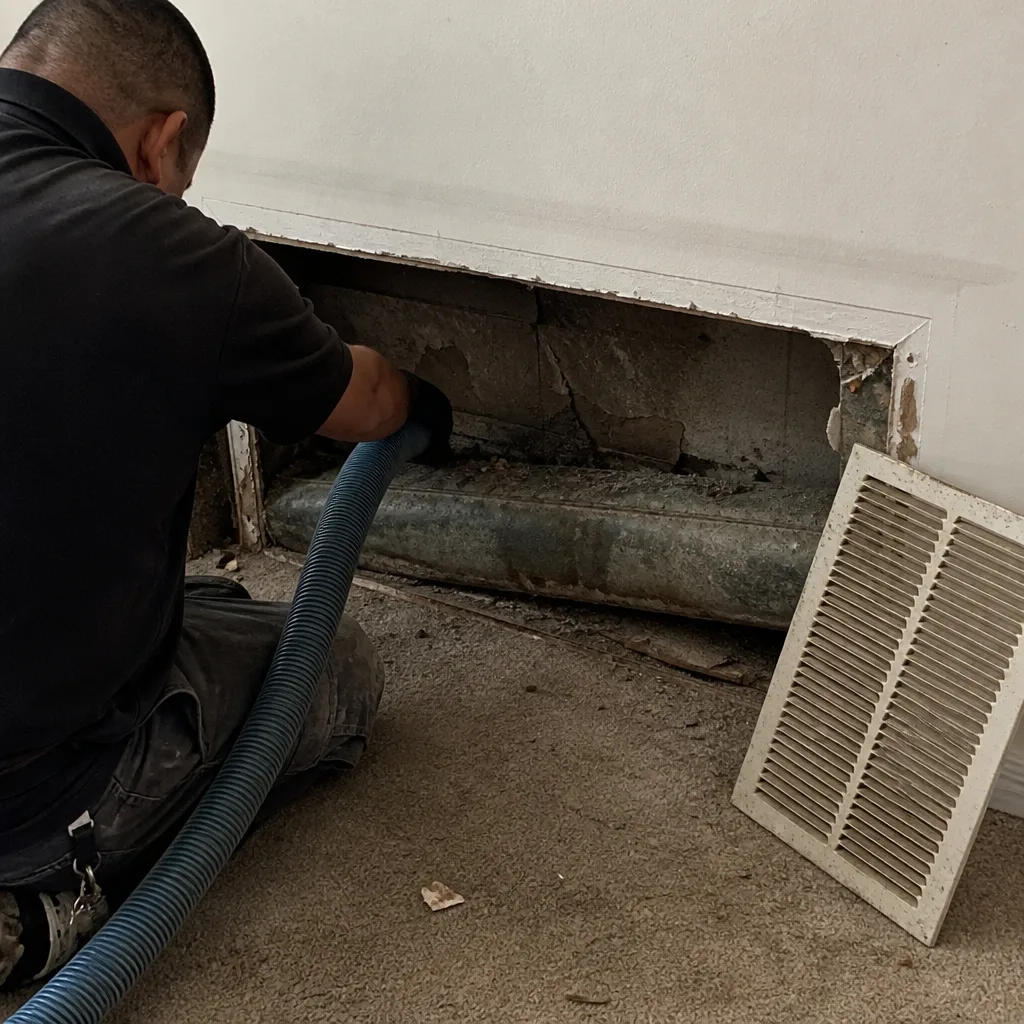
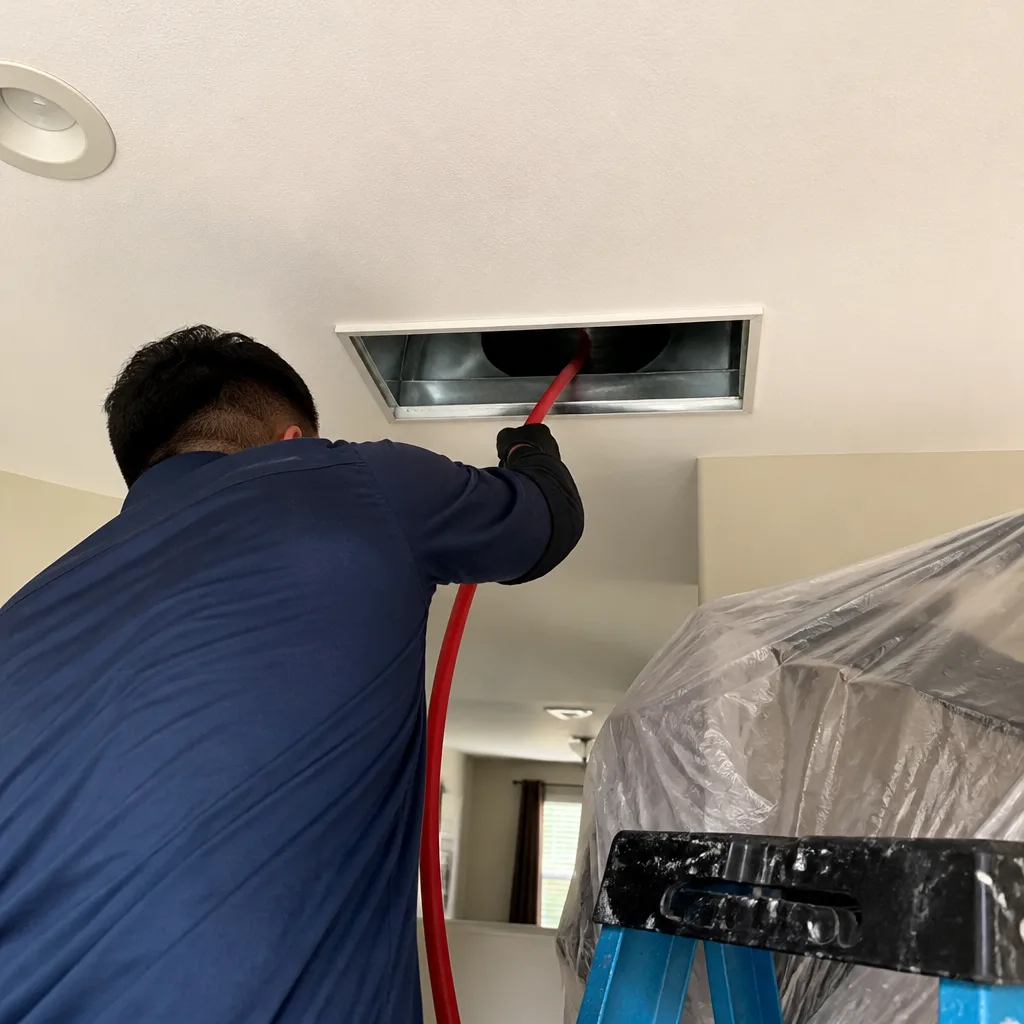
Whole-system duct and dryer vent check with before-and-after photos - you see exactly what came out of your vents
That "$99 whole-house special" is a bait ad - the real number appears once they are in your hallway, or the "clean" is a shop-vac at the register. We photograph the inside of your ducts before and after instead.
Air Duct Cleaning Warning Signs: A La Mesa Homeowner’s Reference Guide
Most homeowners in La Mesa discover they need duct cleaning about six months after they actually needed it. The signs were there: a bedroom that never quite cools down in August, a faint musty smell when the AC kicks on, a utility bill that crept up 15% over two summers. None of these felt like emergencies. All of them were the ductwork talking. This guide walks through the warning signs that actually matter, the ones your thermostat won’t show you, and how to tell the difference between normal system aging and a duct problem worth addressing now. For more detail, see our The Complete Air Duct Cleaning Guide for La Mesa Homeowners.
Styles & brands we work with
- Whole-home duct cleaning
- Dryer vent cleaning
- Camera inspection
- Sanitizing & deodorizing
Quick Answer
The most reliable warning signs that your air ducts need cleaning in La Mesa are: uneven airflow between rooms, musty or burning-dust odors that appear when the HVAC runs, worsening allergy symptoms that correlate with system runtime, steadily climbing utility bills without a matching change in usage, and visible debris or discoloration at accessible duct connections. Any one of these deserves a professional inspection; two or more usually indicates a system that’s actively working against you.
Table of Contents
- Airflow Asymmetry: The Most Underread Diagnostic Signal
- The Three Smell Categories That Point to Duct Problems
- Allergy Symptoms That Track With HVAC Runtime
- Utility Bill Creep: The Lagging Indicator You Can Calculate
- Visual Indicators You Can Check Yourself in La Mesa Homes
- Why La Mesa’s Climate Makes Duct Problems Worse
- Common Mistakes to Avoid
- When to Call a Professional
- Frequently Asked Questions
- The Bottom Line
Airflow Asymmetry: The Most Underread Diagnostic Signal
A 20% drop in airflow through a single register feels like nothing when you’re standing in the room. The air still moves. The room still conditions, just slower than it used to. But that 20% loss often means a disconnected or partially collapsed duct run is dumping conditioned air straight into your crawlspace or attic, and you’re paying to heat or cool dead space. The thermostat sits in the hallway, sees a number it likes, and shuts the system off. It never knows.
Here’s the room-by-room comparison method we recommend to La Mesa homeowners, no equipment needed:
- Set your thermostat fan to “On”, not “Auto.” This keeps airflow constant while you move through the house.
- Hold a thin strip of tissue paper or a single ply of toilet paper near each register, about six inches away. Note how far the strip deflects. More deflection means more airflow.
- Compare rooms of similar size and register count. A 12×12 bedroom should move roughly similar air to another 12×12 bedroom on the same floor. If one register barely moves the paper and another sends it nearly horizontal, you’ve found asymmetry.
- Pay special attention to the furthest rooms from the air handler. La Mesa ranch-style homes from the 1960s and 70s often have long flex-duct runs to back bedrooms. These are the most common failure points we see.
- Check rooms directly above the garage. Duct runs that pass through unconditioned garage space lose more efficiency than any other section of a La Mesa home’s system.
What does asymmetry actually indicate? Three things, in order of frequency: a disconnected duct joint, a crushed or kinked flex run, or a duct section so lined with debris that it’s effectively narrowed the airway. The first two are repair issues; the third is a cleaning issue. All three are addressable. None of them get better on their own. If you want the full picture of what’s happening inside your system, our Air Duct Cleaning in La Mesa service includes a visual inspection of accessible duct sections before any cleaning begins.
The Three Smell Categories That Point to Duct Problems
Odors are the warning sign homeowners notice first, but they usually misattribute them. A smell that appears when the system runs and disappears when it stops is almost always duct-related. The source is in the airstream. Here are the three categories and how to read them.
1. Musty or Mildewed Odor (Moisture Problem)
Musty smells from ducts mean moisture is present somewhere it shouldn’t be. In La Mesa, this shows up most often in two scenarios: condensation forming inside ducts that run through unconditioned crawlspaces during humid summer months, and actual water intrusion from a slow leak or poor drainage. The smell is organic compounds off-gassing from microbial growth on accumulated dust. It won’t air out. The moisture has to be addressed and the contaminated material removed.
2. Burning Dust Smell (Two Different Problems)
The first time you run heat after months of AC-only operation, a brief burning-dust smell is normal. Dust settles on the heat exchanger during the cooling season, and the first heat cycle burns it off. That smell should disappear within an hour. In our experience working on Duct Cleaning La Mesa home systems, an ongoing burning-dust smell every time the heat runs points to something different: a layer of debris on the heat exchanger thick enough that it never fully burns off, or a clogged air filter forcing the system to pull air through built-up dust in the return duct. Ongoing is the key word. Brief and seasonal is maintenance; persistent is a cleaning issue.
3. Organic or Decomposition Odor (Pest Intrusion)
La Mesa sits against open chaparral and canyon land. Rodents and other small animals seek out ductwork for the same reasons you like your living room: it’s dry, moderate in temperature, and quiet. When an animal gets into a duct run and dies, the smell is unmistakable. It’s also usually localized to one or two registers. If you smell something foul and organic from a specific vent, turn the system off and call a professional. This requires removal and sanitizing, not just cleaning, and it’s a strong argument for checking the integrity of your return-side duct connections. Damaged flex duct is an open invitation.
Rotobrush rotary-brush extraction systems, which we run on every cleaning job, are designed to dislodge material that’s adhered to duct walls. That includes organic debris from pest activity. A vacuum-only approach won’t remove it, but a mechanical brush will.
Allergy Symptoms That Track With HVAC Runtime
Here’s the uncomfortable truth about visual dust on your registers: it tells you almost nothing about interior duct condition. A register can look dusty while the ducts behind it are clean, or spotless while the ducts carry a significant debris load. The air coming out of the register is what reaches your lungs, and that air is invisible. So how do you know? Watch your body’s response to system runtime.
The pattern to look for: allergy or asthma symptoms that worsen 15 to 30 minutes after the HVAC starts a cycle and ease somewhat when it’s been off for a while. This timing correlation is far more diagnostic than any visual check. It means the system is aerosolizing something that’s settled inside the ductwork: dust mite waste, pollen that entered through a return leak, pet dander from previous occupants, or mold spores if moisture is present.
Two La Mesa-specific factors amplify this problem. First, our spring and fall seasons are warm enough to run the AC intermittently, which means the system cycles on and off frequently. Every cycle stirs what’s in the ducts and pushes it into living space. Second, many La Mesa homes were built before the current California energy code required sealed duct systems. Older ductwork has more leakage, which means more unfiltered air enters the system and more conditioned air leaves it. A system with leaky returns pulls from the crawlspace or attic, and whatever is in those spaces ends up in your airstream.
Nikro HEPA-rated equipment matters here. A HEPA filter captures particles down to 0.3 microns, which covers dust mite waste, most mold spores, and the bulk of allergy-triggering particulates. When we clean ducts, the extracted air is filtered through HEPA systems so contaminants are captured and contained, not redistributed through the house. That’s the difference between professional cleaning and a shop vac on a long hose.
Utility Bill Creep: The Lagging Indicator You Can Calculate
Utility bills are the last warning sign to show up and the first one homeowners rationalize away. SDG&E rates have gone up, summers have been hotter, the kids were home more. All true. But if you normalize for those variables, a system that’s fighting restricted airflow or leaking ductwork shows a measurable decline in efficiency.
Here’s the calculation, step by step:
- Pull 24 months of electric bills. SDG&E shows your kWh usage per billing period, not just the dollar amount. Use kWh.
- Compare the same month across years. August 2024 vs. August 2025. Adjust for cooling degree days. La Mesa’s summer temperatures fluctuate year to year, so a hotter August means higher baseline usage. If kWh usage is up 15% or more and cooling degree days are flat or up less than 5%, something else is driving the increase.
- Rule out the obvious. Did you add a hot tub? Replace a refrigerator? Start running a dehumidifier? If not, the remaining candidates are diminished equipment efficiency or duct system degradation.
- Separate equipment age from duct condition. A compressor loses efficiency gradually. A disconnected duct run loses 20% or more of airflow abruptly. If your bill jumped in a single season and stayed high, that’s more likely a duct problem than compressor wear.
What does restricted airflow do to your bill? The system runs longer to satisfy the thermostat. A partially blocked or disconnected duct forces the blower to work against higher static pressure. The AC runs more cycles, the compressor draws more power per cycle, and the conditioned air that does leave the supply registers is partially leaked before it arrives. You pay for every kWh either way.
If the airflow test from earlier in this guide shows asymmetry and your bill shows unexplained creep, the two data points corroborate each other. That’s worth acting on. And if the duct run itself is damaged, our Air Duct Repair in La Mesa team can address it on the same visit as a cleaning. One call, both problems handled.
Visual Indicators You Can Check Yourself in La Mesa Homes
La Mesa’s housing stock spans pier-and-beam crawlspace homes in the older village neighborhoods, slab foundations in newer developments, and attic-installed air handlers in two-story homes near Grossmont. Whatever your configuration, there are accessible duct sections you can inspect without special equipment. You’ll need a flashlight, and if you’re going into a crawlspace, long sleeves and a mask.
Here’s what to look for:
- Discoloration at flex duct connections. Where flexible duct attaches to a rigid boot or a main trunk, look for dark staining. This indicates air leakage: the dark ring is dust accumulation where air escapes. Same for gray duct tape that’s lost its adhesion or is peeling at the seams.
- Foil tape failure. Modern duct systems use UL-listed foil tape, not gray cloth tape. If you see silver foil tape that’s delaminating, buckling, or completely detached, the duct joint has been open to air leakage. This is one of the most common repair items we address.
- Insulation compression. Flex duct should look round and full. If a section looks flattened, crushed, or bent at a sharp angle (especially where it passes over a beam or through a small opening), airflow is restricted. Compression of more than 25% of the duct diameter measurably reduces airflow.
- Visible dust at the return grille edges. If the return grille is stained with a gray-brown film at the edges, that’s not necessarily a duct problem. It is, however, a sign of how much particulate enters the system. Look at the filter: if it’s fully loaded in less than a month, your system is pulling more debris than normal, which usually means return-side leakage.
- Sagging flex runs. Flex duct should be supported every 4 to 5 feet. A run that sags significantly between supports creates a low point where debris settles and moisture can pool. In a La Mesa crawlspace with any humidity at all, a sagging duct is a magnet for debris accumulation.
None of these visual checks requires professional training. They require looking at the right places and knowing what normal looks like. If you find one or more of these indicators, the ducts are communicating as clearly as if they had a gauge on the wall. The next step is determining whether cleaning alone resolves it or whether repair is needed. We carry both capabilities, which means the diagnosis doesn’t have to happen twice.
Why La Mesa’s Climate Makes Duct Problems Worse
Duct problems are worse in La Mesa than they’d be in a drier or more uniform climate. Three specific local factors compound every issue we’ve covered in this guide.
Marine-layer humidity. La Mesa sits far enough east to get hot summer afternoons but close enough to the coast that overnight marine layer penetration is common in May and June. That means the crawlspace or attic air is humid at night even when the afternoon is dry. Ducts passing through those spaces experience condensation cycles. Condensation turns accumulated dust into a paste that hardens onto duct walls. That hardened layer reduces interior diameter and, once established, cannot be removed by vacuum alone. It requires mechanical brushing, which is exactly what the Rotobrush system provides.
Chaparral and canyon dust. The Santa Ana wind events that hit La Mesa in fall push fine, dry particulate from the surrounding hills into the area. If your return duct has any leakage, that dust enters the system directly, bypassing the filter. Homes near the boundary between developed La Mesa and the open areas around Collier Park or the hills toward Cowles Mountain see more of this than homes in the central corridor. The dust load in a duct system is proportional to the dust load in the outside air at the leak points.
Heating season is short but concentrated. La Mesa’s heating season runs roughly December through February, with occasional use in November and March. That means anything that settled in the ductwork during nine months of cooling-season operation gets hit with sudden heat for the first time in December. The burning-dust smell we covered earlier is more pronounced in La Mesa homes because the settling season is longer. The more debris that accumulated during the AC months, the stronger and longer that first-heat smell will be.
These factors are why we view Dryer Vent Cleaning in La Mesa and duct cleaning as related but distinct services. Every component of the air system in a La Mesa home works harder because of the climate. Dryer vents clog with the same particulate load, and the consequences of a clogged dryer vent (longer dry times, higher energy use, fire risk) mirror the consequences of a clogged duct system in miniature.
Common Mistakes to Avoid
- Assuming visible register dust means the ducts are dirty. Register dust accumulates from the air in the room, not from inside the ducts. A clean register tells you nothing, and a dusty one tells you nothing either. The interior of the duct run is the only surface that matters for cleaning decisions.
- Dismissing the first-heat burning smell as normal. It is normal, but only briefly. If the smell persists past the first hour, or if it recurs every time the heat cycles, that’s not seasonal burn-off. That’s accumulated debris on the heat exchanger or in the return path.
- Assuming a high-MERV filter will solve a dirty duct problem. A better filter catches more particles entering the system. It does nothing for debris already settled inside the ducts. In some cases, a restrictive filter actually makes airflow problems worse by increasing static pressure.
- Believing that a sealed system never needs cleaning. Sealed ductwork still carries dust, pet dander, skin cells, and whatever entered during construction or before the last cleaning. Sealing reduces new particulate entry. It doesn’t eliminate the accumulation that sealed interior surfaces collect over time.
- Waiting until a smell or symptom is impossible to ignore. The earliest warning signs are subtle: slight airflow difference, a few extra dollars on the electric bill, a morning stuffiness that wasn’t there last year. By the time the problem announces itself, you’ve been paying for it for months.
- Focusing on cost per visit rather than cost per year. A cheap duct cleaning that uses vacuum-only equipment and no containment may take an hour and miss most of the material adhered to duct walls. A professional-grade cleaning with mechanical agitation and HEPA extraction costs more per visit and lasts longer. Annualized, the math favors doing it right once.
When to Call a Professional
Call a professional when any of these conditions applies: You’ve run the tissue-paper airflow test and found asymmetry between similar rooms. You smell mustiness or persistent burning dust every time the system runs. Allergy symptoms track with system runtime. Your normalized utility usage has crept up without explanation. You’ve seen foil tape failure, crushed flex, or discolored duct connections during a crawlspace or attic check. Any single condition warrants investigation; multiple conditions mean the system is actively degrading your comfort and your air quality. Duct Cleaning La Mesa offers free estimates in La Mesa. Call (833) 589-9836 and we’ll walk through what you’re seeing, what it likely means, and whether a service visit makes sense. No obligation, and we’ll tell you honestly if your ducts don’t need work yet.
Frequently Asked Questions
Air duct cleaning in La Mesa typically runs between $400 and $800 for a standard single-family home with up to 15 vents. Homes with multiple systems, extensive duct runs, or significant contamination (pest intrusion, construction debris, heavy buildup) will run higher. The range reflects square footage, number of registers, system accessibility, and the severity of debris accumulation. Call (833) 589-9836 for an exact quote based on your specific home and system configuration.
Cheaper quotes almost always reflect cheaper methods. A $99 whole-house duct cleaning uses vacuum-only equipment with no mechanical agitation, which removes only loose surface dust and leaves the adhered material in place. Some operators use single-stage filtration that returns fine particulate to your living space. Professional-grade cleaning uses rotary-brush extraction and HEPA filtration, which takes longer and costs more per visit. The difference is measurable in what actually comes out of the ducts and what’s in the air when the job is done. Call (833) 589-9836 to discuss what a professional-grade cleaning includes.
A legitimate duct cleaning company provides before-and-after photos of the duct interior at multiple points throughout the system, including the main trunk and several branch runs. You should see the difference with your own eyes: bare metal or clean liner where brown-gray accumulation was before. Your own register-based tissue test should show improved airflow afterward. If a company can’t or won’t provide photographic documentation, that’s a red flag. We photograph every cleaning in La Mesa and show you the proof before we pack up the equipment.
Every 3 to 5 years for most La Mesa homes, with two meaningful exceptions. Homes with pets that shed heavily, homes near open chaparral or construction areas, and homes where residents have significant allergy or asthma symptoms may benefit from more frequent cleaning (every 2 to 3 years). Homes with sealed duct systems, good filtration, and no allergy concerns can often go 5 to 7 years. The honest answer is that the ducts themselves will tell you when they need attention, and the warning signs in this guide are the language they use. Call (833) 589-9836 if you’re unsure whether your last cleaning was recent enough to matter.
Restricted ducts force your AC to run longer cycles to satisfy the thermostat, which directly increases energy consumption. In La Mesa’s July through September cooling season, when the system runs daily, a moderate airflow restriction can add 10% to 20% to your cooling costs. The increase is incremental, which is why most homeowners don’t notice it as a single jump. It compounds across the entire cooling season. Call (833) 589-9836 for an airflow assessment; it’s part of every estimate we do.
Yes, because the problem is the particulate load in the airstream, not the number of people affected. If one household member reacts to airborne dust or mold spores while others don’t, that person’s immune system is simply more sensitive to a contaminant load that unquestionably exists. Cleaning the system reduces the load for everyone. The sensitive person notices the most dramatic difference, but the air is objectively cleaner for the whole household. Call (833) 589-9836 to discuss your specific allergy patterns and whether duct cleaning is likely to help.
The Bottom Line
Duct problems in La Mesa homes announce themselves quietly: a bedroom that warms up faster than it used to, a musty note in the air when the AC cycles on, a few extra dollars on each SDG&E statement. None of these feels urgent. None of them costs much on any given day. But they compound, month after month, and by the time the smell is strong enough or the bill is high enough to force action, you’ve paid for the problem in discomfort and utility overpayment long before you paid the contractor to fix it. The warning signs in this guide are the earliest, most reliable indicators that your system needs attention. Learning to read them is the difference between addressing a problem when it costs hundreds of dollars and addressing it when it costs thousands. Explore more guides & resources to keep your system running efficiently. Call (833) 589-9836 for a free estimate, and we’ll help you interpret what your ducts are telling you.
Written by the team at Duct Cleaning La Mesa, serving La Mesa since 2012.
See the difference
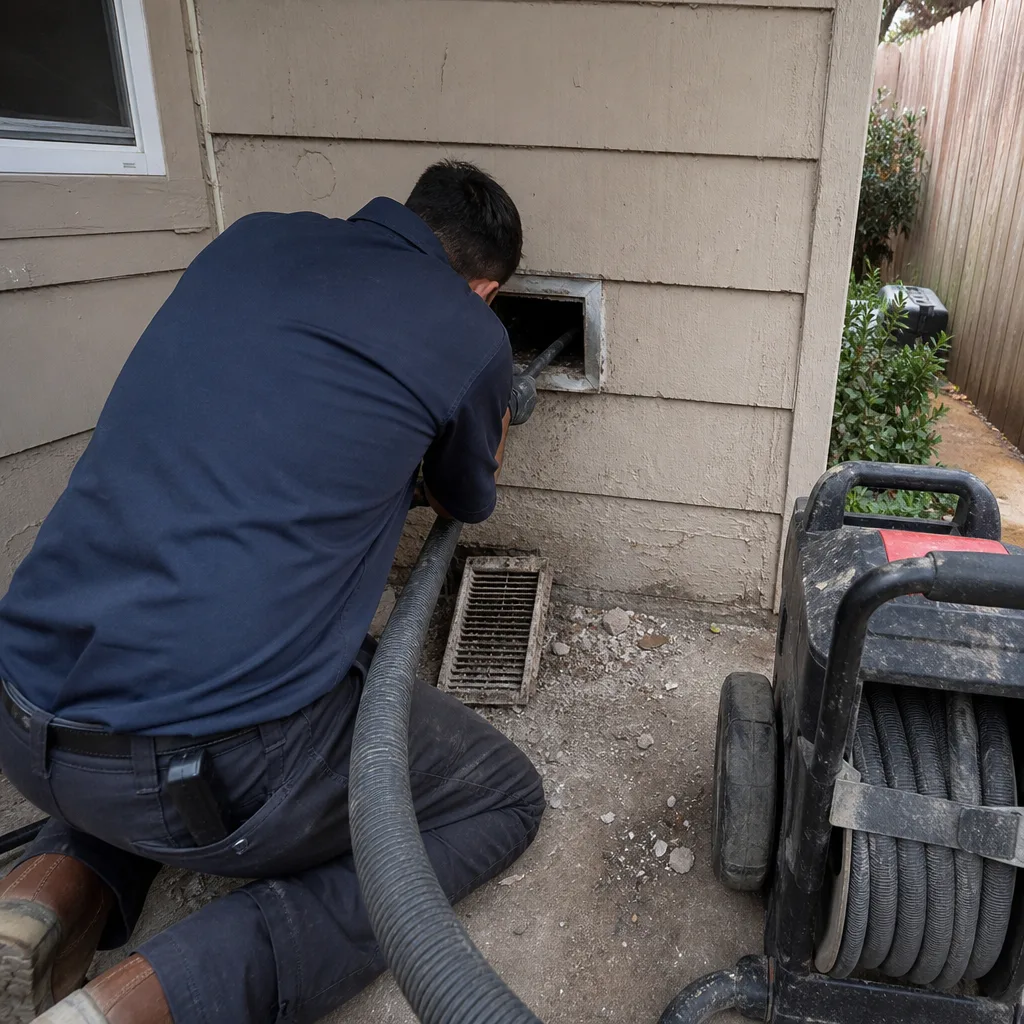 Before
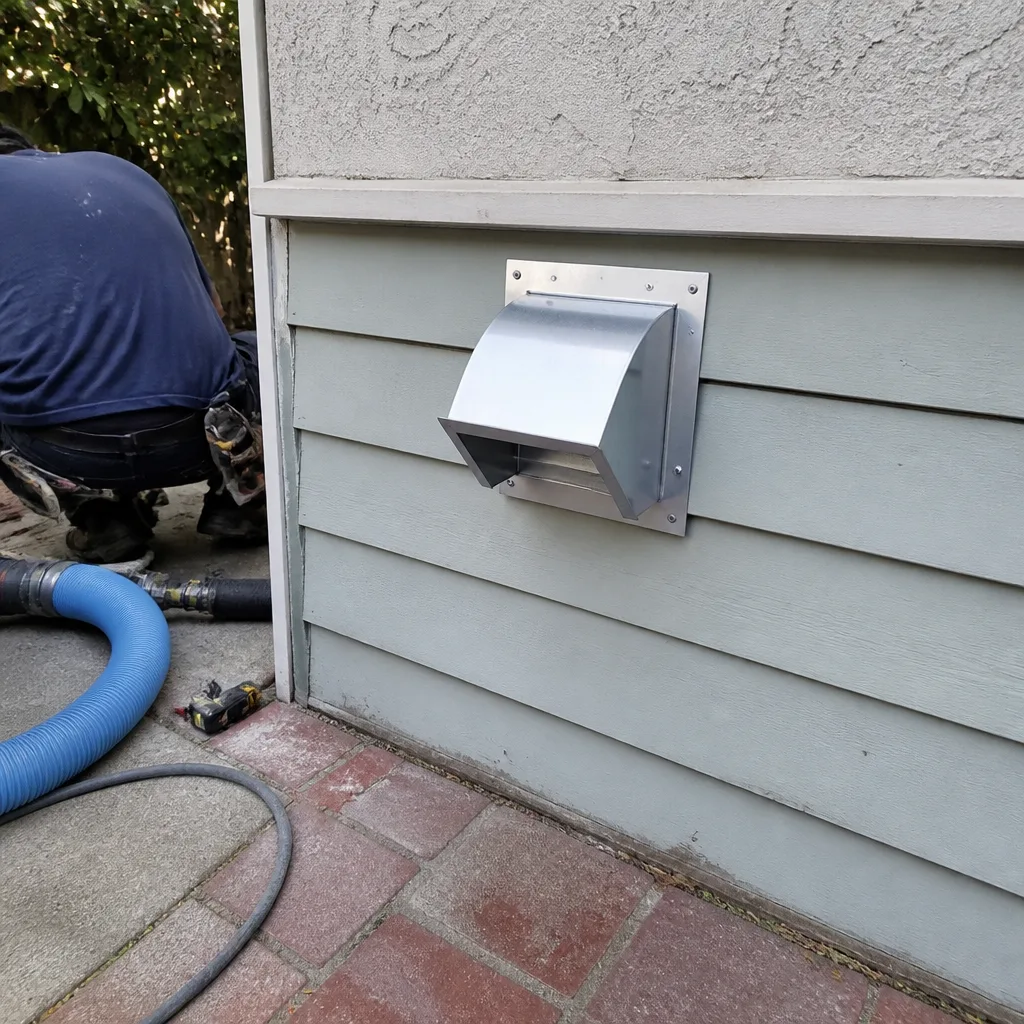 After
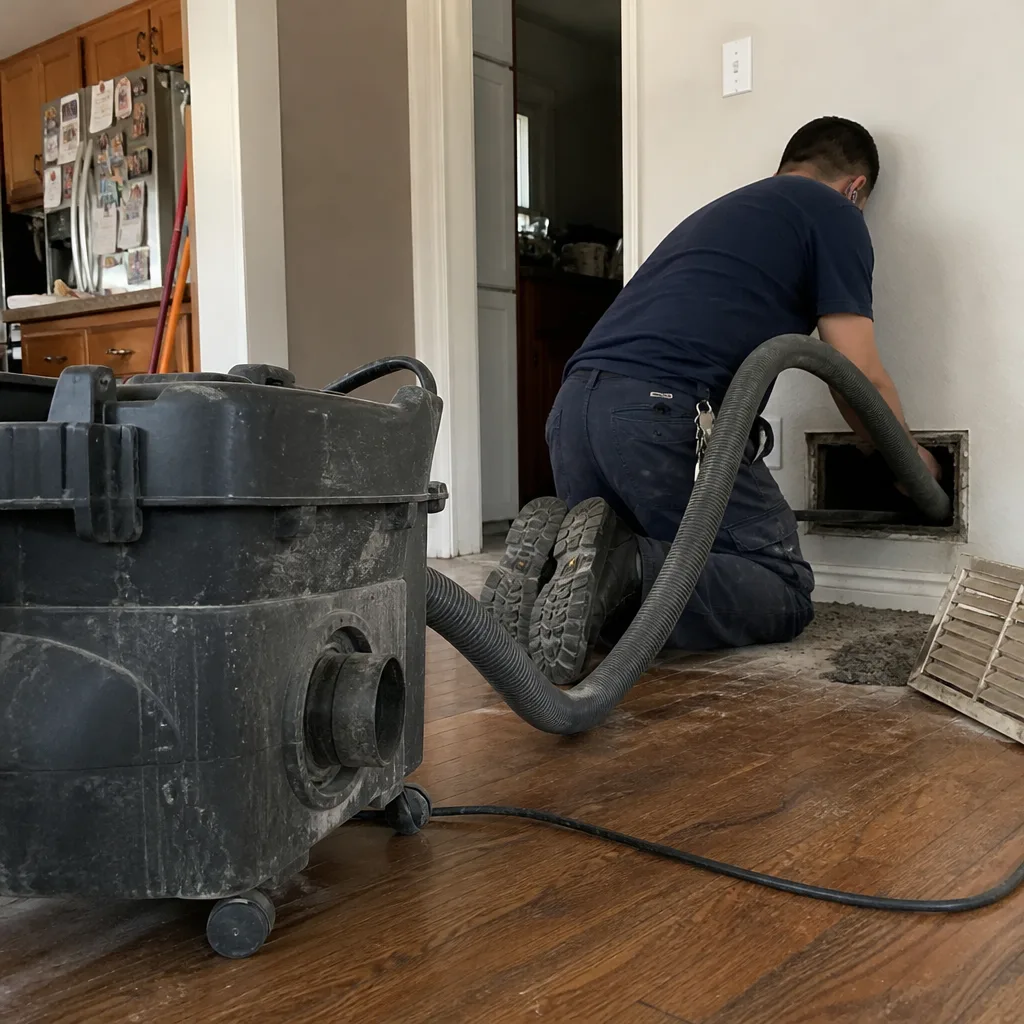 Before
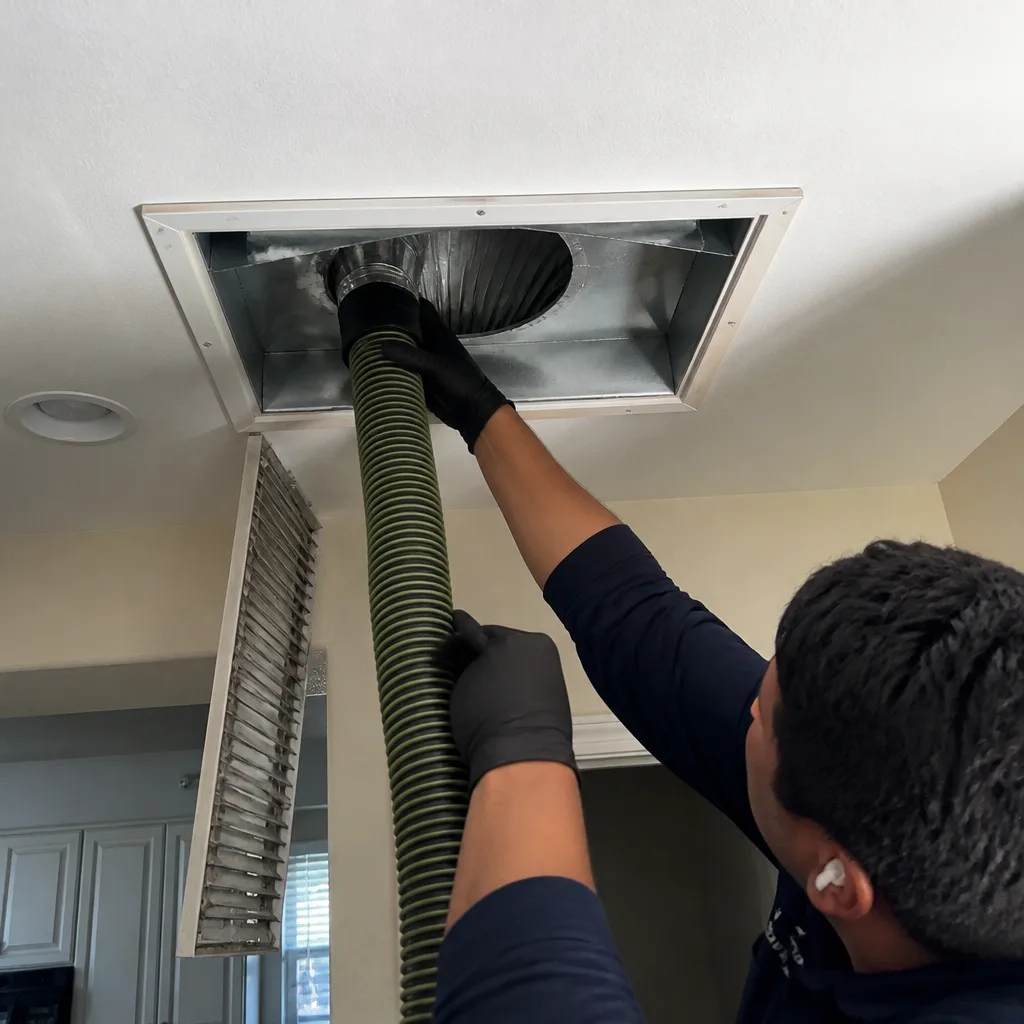 After
 Before
 After